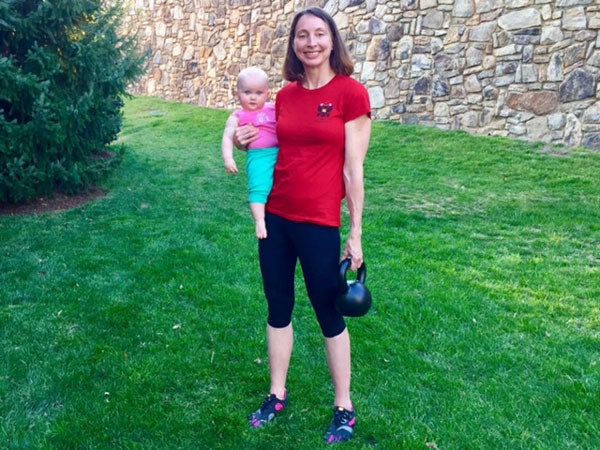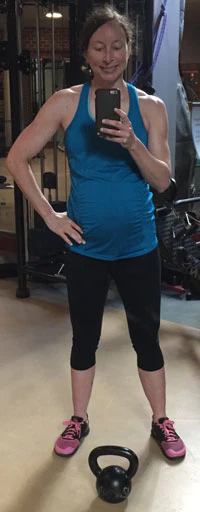
Kathleen Walters, 3 Tage vor der Geburt.
1. Ermutigen Sie Ihre Klientin, mit ihrem Arzt über Fitness und Ernährung zu sprechen. Ärzte sind medizinische Fachkräfte; die meisten sind keine Fitness- oder Ernährungsexperten. Als zertifizierte Ernährungscoachin der Precision Nutrition Level 2 und lebenslange Athletin wurde mir früh klar, dass ich mehr über Fitness und Ernährung wusste als mein Arzt. Das gab er auch zu! Während ich den Rat meines Arztes respektierte und meine eigene Gesundheit und Sicherheit sowie die Gesundheit und Sicherheit meines Babys priorisierte, stellte ich einige seiner Fitnessempfehlungen in Frage und lieferte Forschung und Daten zur Unterstützung meiner Position.
Durch unser Hin und Her konnte ich ein Fitnessprogramm für Schwangere erstellen, das meinen eigenen Bedürfnissen und Interessen entsprach, aber die Bedenken meines Arztes berücksichtigte. Es ist entscheidend, dass Ihre Klientin eine Genehmigung von einem medizinischen Fachmann hat, bevor sie mit einem pränatalen Programm beginnt. Die Zusammenarbeit mit dem Arzt kann Ihnen und Ihrer Klientin helfen, die Schwangerschaft so zu navigieren, dass sie gesund, glücklich und fit bleibt.
2. Halten Sie die Workouts kurz und einfach. Schwangerschaft ist nicht die Zeit für lange und komplizierte Workouts. Während einer Schwangerschaft erleben Frauen oft Phasen von Müdigkeit (insbesondere im ersten und dritten Trimester) und Übelkeit (am häufigsten im ersten Trimester, auch bekannt als „Morgenübelkeit“, obwohl meine am späten Nachmittag und Abend auftrat). Schwangere Mütter jonglieren auch oft mit zahlreichen beruflichen und häuslichen Verpflichtungen, während sie sich auf das Baby vorbereiten. Ich plante Workouts, die nur 15 Minuten dauerten, und ergänzte diese Einheiten mit täglichen Spaziergängen mit meinem Welpen. So konnte ich problemlos 4-5 Workouts pro Woche in meinen vollen Zeitplan integrieren.
3. Bleiben Sie flexibel mit dem Programm Ihrer Klienten und geben Sie ihnen Optionen, wenn sie sich nicht zu 100 % fühlen oder gestresst sind. Meine Workouts während der Schwangerschaft folgten meinem „3S-System“ der Programmierung: In jeder Einheit sollten Fähigkeiten, Kraft und Schweiß enthalten sein. Anstelle einer bestimmten Anzahl von Sätzen, die in einem Workout abgeschlossen werden sollten, war jeder Abschnitt des Workouts zeitbasiert (As Many Rounds As Possible oder AMRAP-Stil). So konnte ich die Länge meiner Workouts je nach Zeitplan an jedem Tag anpassen.
Ein typisches Workout sah so aus:
Aufwärmen:
Kniebeuge zu Stand: 5
Körpergewicht einbeinige Kreuzheben: 5 R/L
Leichter Halo: 5 R/L
Fähigkeitsarbeit:
(5-10 Minuten AMRAP)
Körpergewicht einbeinige Kniebeuge zur Box (Pistol-Übung): 2-3 R/L
Kraftarbeit:
(5-15 Minuten AMRAP)
Einarmige Ruderzüge: 6-8 R/L
Doppel-Kettlebell-Suitcase-Kreuzheben: 6-8
Sitzende einarmige Militärpresse: 6-8 R/L
Schwitzarbeit:
(5-10 Minuten EMOTM Jede Minute zur vollen Minute) abschließen:
Zwei-Hand-Kettlebell-Schwingen: 5
Doppel-Kettlebell-Bauernlauf: 20 Sekunden
Abkühlung:
Beinbeuger-Dehnung
Hüftbeuger-Dehnung
Zwerchfellatmung
Bleiben Sie dran für Teil 2, in dem ich die nächsten 3 Tipps für Trainer, die mit werdenden Müttern arbeiten, behandeln werde.
Seien Sie glücklich, gesund und stark,
Kathleen Walters, RKC
****
In Zusammenarbeit mit Master RKC Michael Krivka verfasst