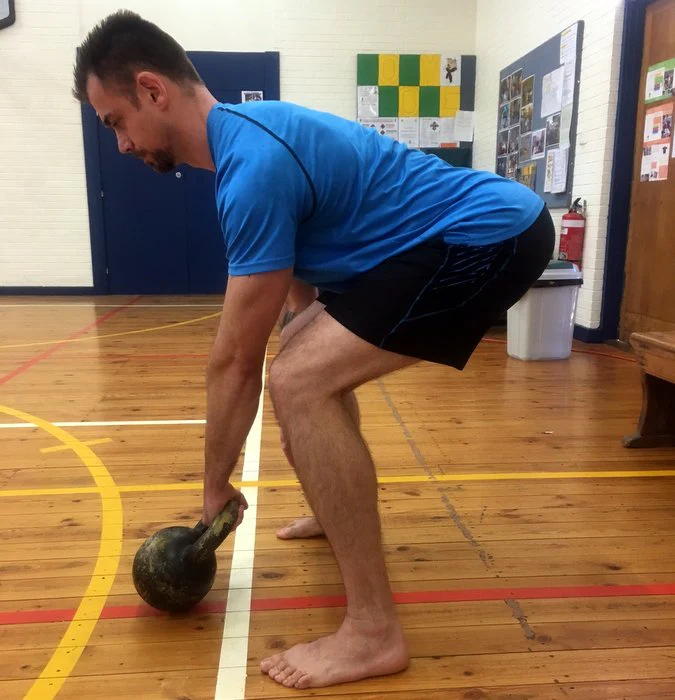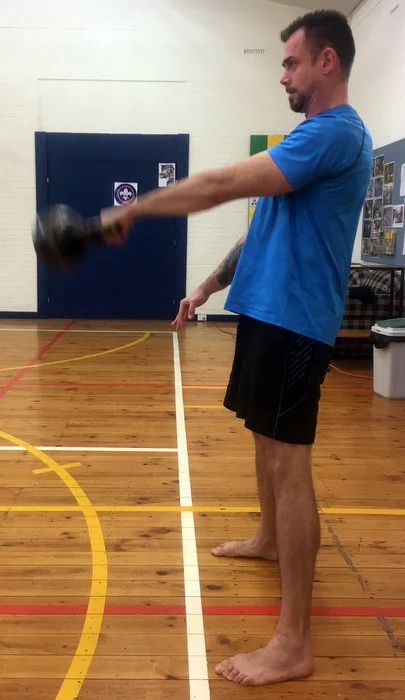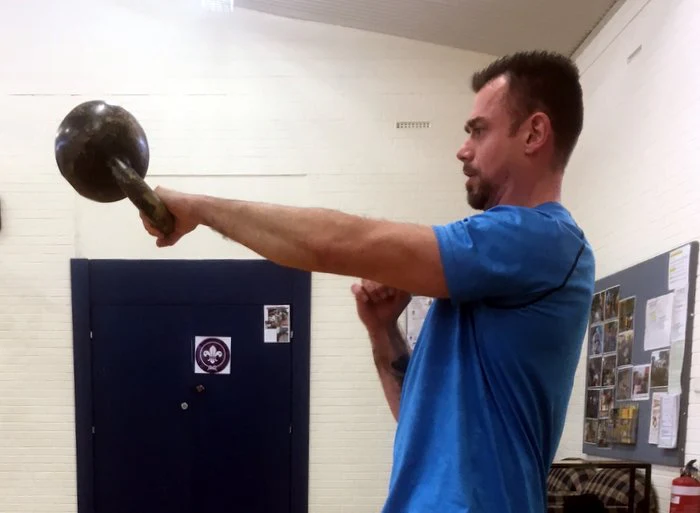
Es besteht kein Zweifel, dass der Schwung das Zentrum des Kettlebell-Universums ist. Den Schwung zu meistern sollte eines der ersten Ziele deiner Kettlebell-Reise sein. Es ist einfach – wenn du gut schwingen kannst, wirst du wahrscheinlich auch deine Kettlebell richtig heben und reißen. Außerdem sollte der Schwung genau wie dein Heben und Reißen aussehen, die Hüften machen die ganze Arbeit und der Arm führt die Kettlebell mit etwas „Lenkkraft“ dorthin, wo du sie haben möchtest. Während ich den Schwung als grundlegend betrachte, kann es schwierig sein, ihn so zu meistern, dass er zu einer Sache von Kraft und Anmut wird. „Grundlegend“ bedeutet nicht „einfach“.
Mein vorheriger Beitrag, „Regress To Progress“, beschreibt die Progressionen, die wir im RKC verwenden, um den Schwung zu lehren. Er erklärt, wie die meisten Probleme beim Kettlebell-Schwung gelöst werden können, indem man zurückgeht, um die Progressionen zu meistern. Ebenso kann das Beherrschen von Regressionen deinen Kettlebell-Schwung wirklich verbessern, egal wo du dich gerade in deiner Praxis befindest.
Meiner Meinung nach geben großartige Trainer Hinweise, die die Technik sofort und radikal verbessern können. Ich habe die beiden Hinweise in diesem Beitrag von dem ehemaligen Master RKC Geoff Neupert in meinen wenigen Jahren des Trainings mit ihm gelernt. Mit diesen beiden Hinweisen fühle ich, dass ich einen Schwung wirklich transformieren kann. Ich benutze sie jedes Mal, wenn ich bei einem RKC-Workshop unterrichte.
Die Timing des Schwungbewegung wird selten im Detail besprochen, und doch kann sie eine sehr kraftvolle Rolle dabei spielen, deinen Schwung zu einer Sache von Anmut und Schönheit – und verdammt kraftvoll – zu machen!
Einer der Vorteile der Verwendung von Kettlebells ist das Arbeiten mit der exzentrischen Phase (dem Rückschwung) oder der Abwärtsphase des Kettlebell-Schwungs. Die Technik „Overspeed Eccentric“ ist eine Methode, um die Intensität des Kettlebell-Schwungs im RKC zu erhöhen. Diese Technik fügt eine aktive Beschleunigung der Kettlebell im Rückschwung hinzu, zusätzlich zur ballistischen konzentrischen Beschleunigung der Kettlebell während der Vorwärtsbewegung. Anstatt die Kettlebell einfach mit der Schwerkraft nach unten beschleunigen zu lassen, drückt ein Partner die Kettlebell von oben im Schwung nach unten. Diese unterstützte Beschleunigung erhöht auch die Geschwindigkeit der exzentrischen Muskelkontraktion der hinteren Kette.
Während dieser exzentrischen Muskelkontraktion verlängern sich die Muskeln durch die externe Last der Kettlebell, während sie unter Spannung kontrahieren. Forschungen zeigen, dass exzentrische Muskelkontraktionen in der Lage sind, mehr Kraft zu erzeugen als isometrische oder konzentrische Muskelkontraktionen. Die maximale exzentrische Kraft wird auf etwa 1,5 bis 2,0 Mal der maximalen konzentrischen Kraft geschätzt. Anders ausgedrückt, du wirst in der negativen Phase von Übungen stark. Deshalb wird das Konzentrieren auf die negative oder exzentrische Phase die Kraft aufbauen, die für beide Phasen der Übung erforderlich ist. Zum Beispiel, das Lernen, wie man einen Liegestütz oder Klimmzug macht, indem man sich auf die exzentrische Phase konzentriert, ist der Weg, um die Kraft für deinen ersten vollständigen Liegestütz oder Klimmzug aufzubauen.
„Overspeed Eccentrics“ führen zu einer Ansammlung von kinetischer Energie durch größere Kraftproduktion und elastische Energie. Studien haben gezeigt, dass Trainingsprogramme, die exzentrische Kontraktionen bei schnellen Geschwindigkeiten nutzen, die neuronale Hemmung beseitigen. Normalerweise ist die neuronale Hemmung ein Mechanismus zum Schutz vor Verletzungen, wie das Phänomen des Dehnungsreflexes veranschaulicht. Das schnelle Dehnen der hinteren Kettenmuskeln im Rückschwung aktiviert die sensorischen Muskelspindeln – die im fleischigen Teil des Skelettmuskels verteilt sind. Um den Muskel vor Überdehnung zu schützen, wird das Rückenmark benachrichtigt, dass die Muskeln gedehnt werden. Als nächstes reagiert das Rückenmark, indem es den gedehnten Muskel kontrahiert, während es die Kontraktion der Antagonistenmuskeln hemmt. Dieser Prozess umgeht das Senden von Nachrichten an das Gehirn und ist als „Dehnungsreflex“ bekannt. Die Nutzung der Elastizität des Muskels und des Dehnungsreflexes wird auch als „Dehnungs-Verkürzungs-Zyklus“ bezeichnet. Je schneller der Muskel exzentrisch gedehnt wird, desto größer wird die Kraft bei der folgenden konzentrischen Kontraktion sein. Mit anderen Worten, du wirst einen stärkeren und explosiveren Schwung erhalten.
Um die Vorteile von Overspeed Eccentrics während des Zweiarm-Kettlebell-Schwungs zu nutzen, müssen zwei Dinge vorhanden sein: ein schneller Rückschwung und ein schneller Wechsel von der exzentrischen Muskelkontraktion des Rückschwungs zu einer konzentrischen Kontraktion des Vorwärtsschwungs. Diese Technik kann beim Kettlebell-Schwung implementiert werden, wenn ein Partner die Kettlebell von oben im Schwung auf Brusthöhe kräftig nach unten drückt, wie wir es im RKC tun.
Zufälligerweise ist ein häufiger Fehler in der Technik des Kettlebell-Schwungs, nicht tief genug im Rückschwung zu gehen. Ein unzureichender Rückschwung führt zu einem schwachen Schwung ohne viel Kraft. Die Overspeed-Eccentric-Übung ist eine Lösung dafür – zusammen mit anderen „A-HA-Übungen“, die du bei einem RKC-Workshop lernen wirst.