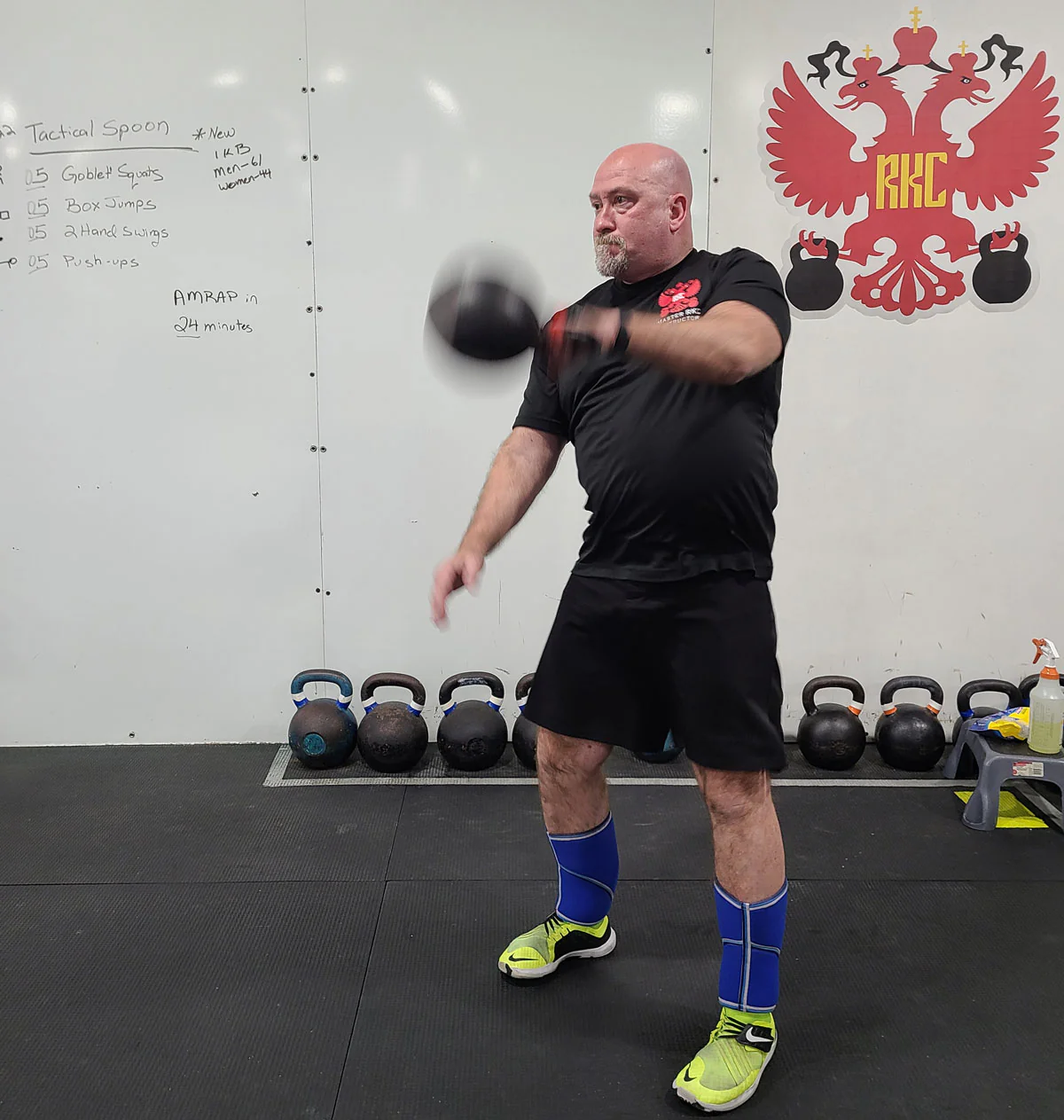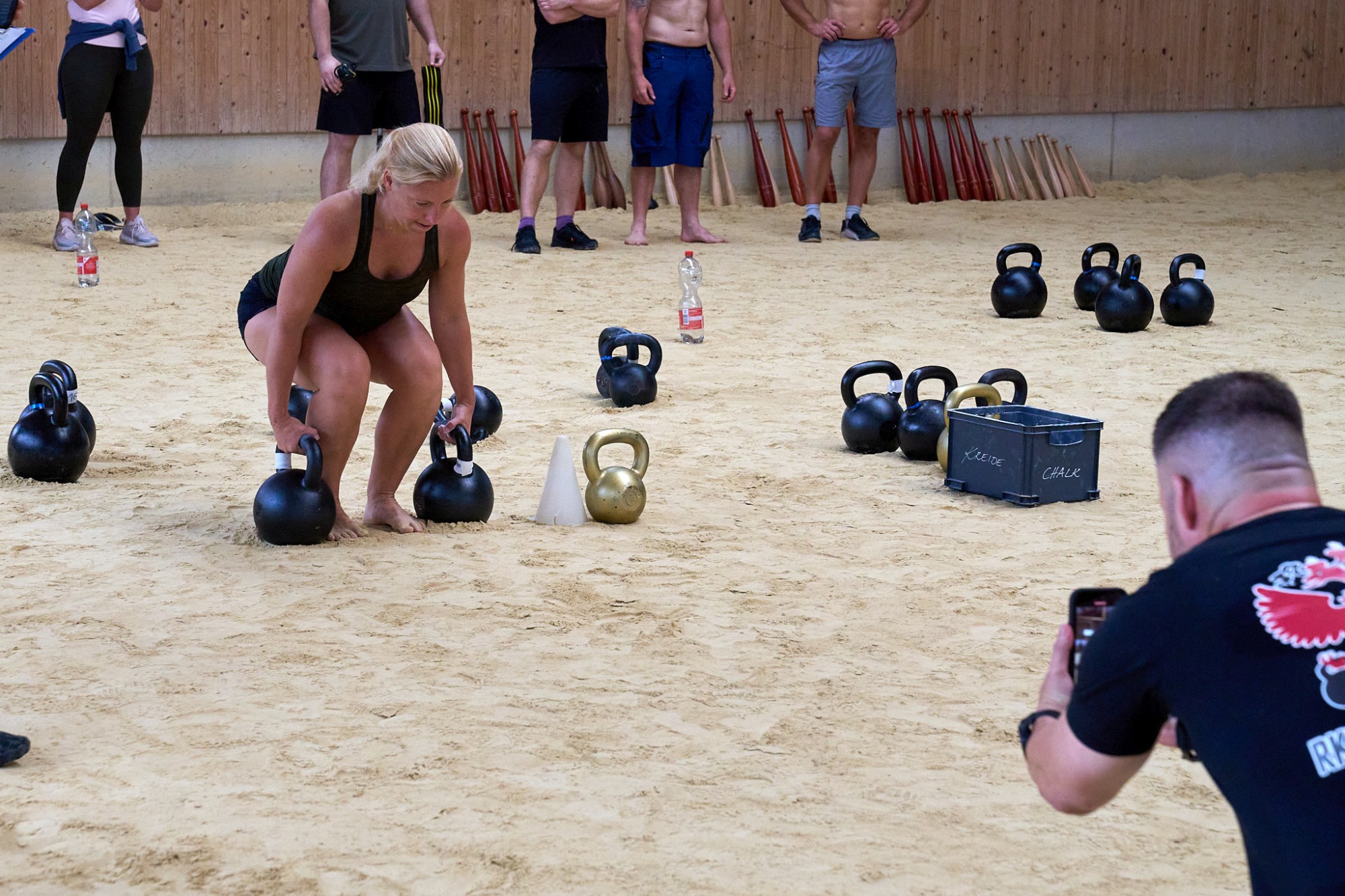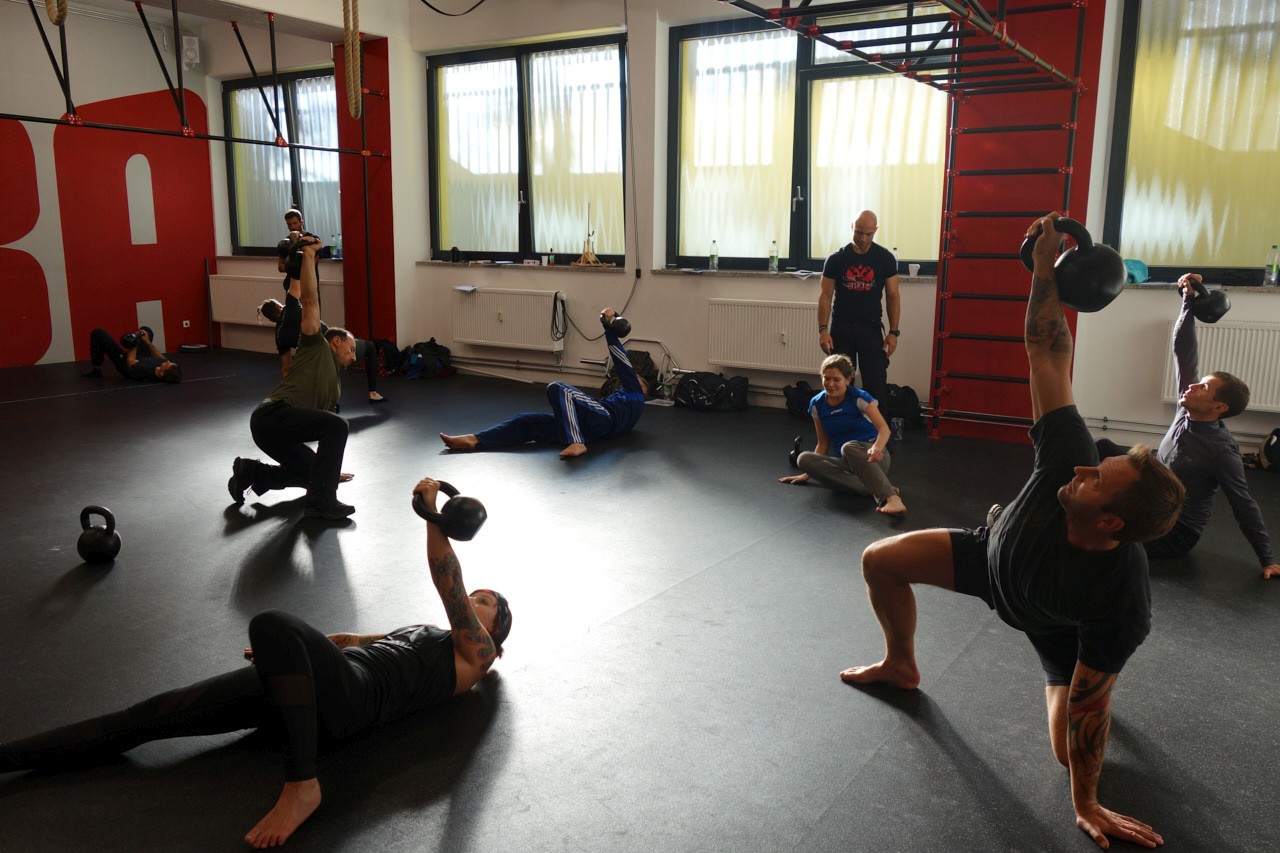
Zweitens müssen Sie einen effizienten und kraftvollen Rückschwung entwickeln. Der Rückschwung wird manchmal übersehen oder minimiert. Aber je mehr Sie daran arbeiten, desto einfacher wird der Schwung, Clean und Snatch. Sie werden ein hocheffizientes System entwickeln, um Energie vom Boden über die Hüften in die Überkopf-Position zu übertragen. Ignorieren Sie diesen Aspekt des Trainings zu Ihrem eigenen Nachteil.
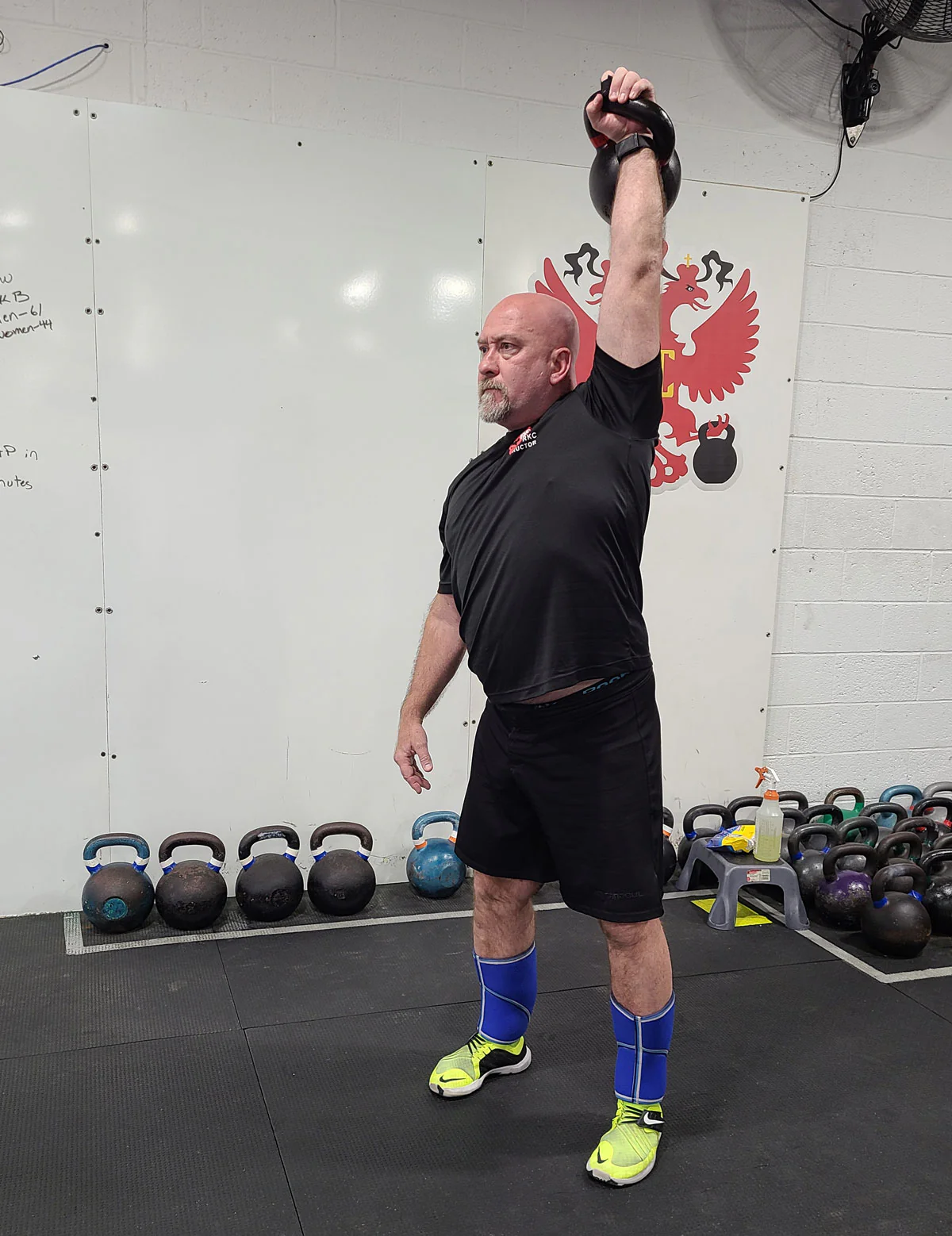
Schließlich trainieren Sie, um einen sanften und weichen Überkopf-Lockout zu entwickeln. Wenn Sie die meisten Menschen beobachten, die die Kettlebell snatchen, sieht es aus wie ein großer Schwung, bei dem die Kettlebell über die Oberseite ihrer Hand nach oben geht, bevor sie auf den Unterarm schlägt. Dies ist sehr ineffizient und zeigt kein tragfähiges Verständnis dafür, wie man Energie vom Körper in die Kettlebell übersetzt und überträgt. Die Kettlebell sollte aus dem Rückschwung explodieren und dann in die Überkopf-Position schweben, wo die Hand sanft durch den Griff gestoßen wird, während alle Gelenke, von unten nach oben, sanft verriegelt werden.
Vor dem Versuch des Snatch Tests
Wenn Sie mit der Vorbereitung auf den Snatch Test beginnen, hier ist ein wichtiger Hinweis, der den Test erleichtert – sowie Abnutzung und Verschleiß an Ihren Schultern spart. Bevor Sie mit hochrepetitiven Snatch-Übungseinheiten beginnen, sollten Sie in der Lage sein, Ihr Kettlebell-Gewicht für den Snatch Test zehnmal rechts und links zu drücken. Arbeiten Sie daran, aus dem Rack heraus in eine solide Überkopf-Lockout-Position zu gelangen und dann einen langsamen und strengen Übergang zurück ins Rack. Sobald dies einfach wird (und das wird es nach einer Weile), sind Sie relativ sicher, mit hochrepetitiven Snatches zu beginnen.
Lassen Sie es mich so ausdrücken: Bis Sie die Kraft haben, 20% von dem, was Sie während des Tests snatchen werden, strikt zu drücken, haben Sie nichts darin verloren, für 100% der Ballistiken zu üben, die Sie machen werden.
Bauen Sie die Grind-Kraft vor der ballistischen Intensität und den Zahlen auf.
Training für den Snatch Test
Das Training für den Snatch Test sollte aus zwei sehr unterschiedlichen Arten von Trainingseinheiten bestehen: Grinds und Ballistics.
Ihre Grind-Sitzungen sollten so ausgerichtet sein, dass Sie die 10×10 strikten Press auf beiden Seiten mit Ihrem Kettlebell-Gewicht für den Snatch Test erreichen können. Diese Sitzungen können mit niedrigeren Gewichten durchgeführt werden, um die Wiederholungen zu üben. Sie können auch schwerer durchgeführt werden, um zusätzliche Kraft und Stabilität für den Übergang vom Rack zum Lockout und vom Lockout zurück ins Rack aufzubauen.
Ihre Ballistic-Sitzungen sollten bestehen aus:
- 40% Swings; sowohl mit Snatch-Gewicht als auch schwerer
- 40% Cleans; sowohl mit Snatch-Gewicht als auch schwerer
- 20% Snatches; mit leichterem als Snatch-Gewicht, Snatch-Gewicht und schwerer
Trainingseinheiten sollten relativ kurz sein und langsam in Last und Volumen zu den Snatch Test-Zahlen fortschreiten. Richtig geplant und ausgeführt, können Sie in 8-10 Wochen moderaten Trainings von 10×10 Snatches rechts und links zu 50×50 Snatches rechts und links übergehen.
Wann man den Snatch Test ablegen sollte
Der einzige Zeitpunkt, zu dem Sie den Snatch Test ablegen sollten, ist, wenn Sie sowohl physisch, mental als auch technisch eingestellt sind. Die RKC-Erfahrung wird wesentliche Änderungen an der Technik vornehmen, die Sie zur Vorbereitung auf den Snatch Test verwendet haben. Wenn Sie das Gefühl haben, dass Sie mehr Zeit zur Vorbereitung auf den Snatch Test benötigen, haben Sie 90 Tage nach Ihrem RKC-Workshop Zeit, um ein Video einzureichen. Ich würde diese Option den meisten Teilnehmern des RKC dringend empfehlen. Sobald Sie Ihre Technik beim RKC eingestellt haben, können Sie nach Hause gehen und auf eine effizientere und sicherere Weise arbeiten. Wenn Sie einfach in den Snatch Test springen, nachdem Sie gelernt haben, wie man den Snatch sicher und effektiv ausführt, werden Sie wahrscheinlich einfach zu alten Gewohnheiten und Anpassungen zurückkehren, während Sie unter dem Stress des Tests stehen. Es braucht Zeit, um eine neue Grundlage für Ihre Snatch-Technik zu entwickeln, und Sie können das leicht innerhalb des 90-Tage-Fensters tun.
Wenn Sie interessiert sind zu sehen, wie ich den „perfekten“ Snatch Test sehe, schauen Sie sich das Video unten an:
Ich hoffe, das hilft Ihnen, sich auf den RKC Snatch Test vorzubereiten. Bitte kontaktieren Sie mich, wenn Sie weitere Fragen oder Bedenken haben.