Wenn wir an Bruce Lee denken, der einen Kick ausführt, an Muhammad Ali, der einem Schlag ausweicht, oder an einen großartigen Wrestler wie Dan Gable, der schnell für einen Double-Leg-Takedown ansetzt und seinen Gegner auf die Matte wirft, können wir uns leicht vorstellen, wie Kraft auf mehreren Ebenen ausgeübt wird. Diese multidimensionale Kraft und Stabilität wird durch spezifisches Krafttraining erreicht. Es ist der Schlüssel zur Optimierung der Körperbewegung und Kraft für den Knock-out-Schlag eines Kampfsportlers. Es bietet auch unvergleichliche Grundlagen für andere Athleten.
Die Mehrheit der heutigen Programme bevorzugt traditionelle Ansätze für Kraft- und Konditionstraining, die oft stark auf sagittale Bewegungen (vorwärts und rückwärts) ausgerichtet sind. Wir benötigen definitiv Kraft in der sagittalen Ebene, und viele der kosteneffizienten Übungen wie Kniebeugen und Kreuzheben finden in dieser Ebene statt.
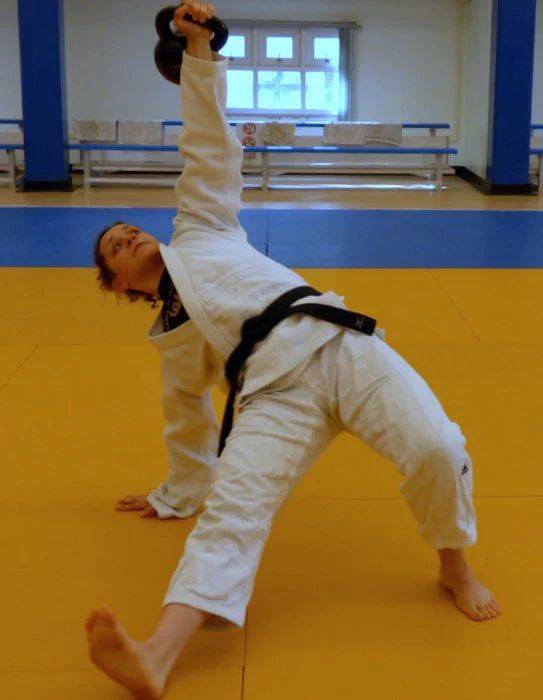
Aber bei der Gestaltung unseres Trainings ist es wichtig zu verstehen, dass der menschliche Körper sich nicht nur in eine Richtung bewegt. Wir können uns auch seitwärts, vorwärts, rückwärts und in Rotation bewegen. Training in mehreren Ebenen oder in mehreren Richtungen hilft uns, höhere Ebenen des Körperbewusstseins, des Gleichgewichts und der Koordination zu erreichen. Diese verbesserte Programmierung ermöglicht schnellere Reaktionszeiten und eine effizientere neuro-motorische Funktion. Training in allen Ebenen kann Athleten und Klienten helfen, Verletzungen zu vermeiden und ihre Leistung zu steigern. Es ist eine notwendige Praxis für jeden Athleten, der entschlossen ist, konstant auf einem Elite-Niveau zu performen.
Die drei Ebenen:
Sagittale Ebene:
Bewegungen in der sagittalen Ebene bewegen sich vorwärts und rückwärts oder durch die Mittellinie des Körpers. Häufige Beispiele für sagittale Bewegungen sind Bizeps-Curls oder Sit-ups.
Frontalebene:
Bewegungen entlang der Frontalebene können als seitliche Bewegungen beschrieben werden, wie Abduktion und Adduktion. Übungen, die durch die Frontalebene arbeiten, sind seitliche Ausfallschritte und Hampelmänner.
Transversalebene:
Bewegungen in der Transversalebene umfassen horizontale Abduktion, Adduktion oder Rotationsbewegungen. Übungsbeispiele sind der Russische Twist oder ein Kabelholzschnitt.
Ein Hauptgrund, warum die meisten Sportverletzungen in der Frontal- und Transversalebene auftreten, ist, dass die meisten Athleten nur in der sagittalen Ebene trainieren. Athletik hängt von einer enormen Menge an Bewegung in verschiedenen Aktionsebenen ab. Kraft- und Konditionsprogramme für Athleten sollten bestrebt sein, so viele Variationen von Bewegungen wie möglich einzubeziehen, um Muskeln in so vielen Ebenen wie möglich zu trainieren (Kenn, 2003).
Als Trainer und Coaches müssen wir unsere Athleten darauf vorbereiten, ihre Körper in allen drei Ebenen zu stärken. Wenn Ihre Athleten den Unterschied zwischen diesen drei Bewegungsrichtungen verstehen und ihre Fähigkeit entwickeln können, ihre Bewegungen effizient miteinander zu verweben, werden sie gut abgerundet und weniger verletzungsanfällig sein. Zum Beispiel dreht sich ein Kämpfer im Ring oder Käfig, bewegt sich nach links und rechts, weicht Tritten aus, dreht sich, schlägt zu und wird ständig angegriffen. Wenn sein oder ihr Körper in einer bestimmten Ebene schwach ist, ist die Wahrscheinlichkeit einer Verletzung viel größer.
Die meisten beliebten Trainingsmethoden verwenden keine mehrdimensionalen Bewegungen. Powerlifting, olympisches Gewichtheben, CrossFit-Training und Bodybuilding arbeiten hauptsächlich in der sagittalen Ebene. Sehr wenige Bewegungen finden in den Transversal- oder Frontalebenen statt. Darüber hinaus beinhalten die meisten dieser Trainingsmethoden keine mehrdimensionalen Bewegungen—Kombinationen aus Frontal-, sagittalen und transversalen Bewegungsrichtungen. Diese beliebten Trainingsmethoden sind nach wie vor gültig für das Training von Athleten, aber Trainer sollten auch Möglichkeiten in Betracht ziehen, sportartspezifische Bewegungen zu trainieren, die Athleten auf dem Spielfeld ausführen werden (Brown, 2013).