Wenn ich Zweifel habe, ziehe ich John Jesses klassisches Buch, Wrestling Physical Conditioning Encyclopedia (gedruckt 1974), von meinem Regal. Jesse sammelte die Geschichte und Weisheit jedes Kraft-, Konditions- und Wrestling-Coaches und stellte sie in einem seltenen Buch zusammen, das alle Grundlagen des Krafttrainings abdeckt.
Die erste Lektion, die man beim Lesen von Jesse lernt, ist Demut. Falls Sie denken, dass SIE etwas erfunden haben, blättern Sie durch die Seiten, um Folgendes zu finden:
- Swings
- Sandsäcke
- Zirkeltraining (einschließlich der Mischung von Körpergewichtsarbeit mit Langhanteln)
- Rehabilitation, Prähabilitation, Sehnen- und Bänderarbeit
- Und viele, viele weitere Ideen, die Ausrüstung, Bewegung und Training betreffen
- Oh... und der Get-Up
Auf Seite 154 treffen wir Otto Arco. Er war das Modell für viele von Rodins Skulpturen und wir erinnern uns an ihn für seine Fähigkeit in einer bestimmten Übung:
Arco, bei einem Körpergewicht von 138 Pfund, konnte einen einhändigen Get-Up mit 175 Pfund machen. Der Get-Up war sein „Geheimnis“ für ganzheitliche Körperkraft, Körperkraft und Körperzusammensetzung. Arco schrieb dies in seinem Buch, How to Learn Muscle Control:
Der Hauptzweck der Muskelkontrolle ist Selbstbeherrschung. Muskelkontrolle umfasst weit mehr als nur die Fähigkeit, die Muskeln zusammenzuziehen. Es lehrt dich zu entspannen, was manchmal sogar wichtiger ist als die Kontraktion. Es gibt dir eine selektive Kontrolle und damit die Fähigkeit, nur die Muskeln auszuwählen, die für die zu erledigende Arbeit notwendig sind, und nur diese Muskeln; die antagonistischen oder nicht hilfreichen Muskeln bleiben entspannt.
Arco, vor über einem Jahrhundert, hob den Kern und die Schlüssel zum Hardstyle-System hervor: „selektive Kontrolle.“ Dies ist die Fähigkeit, bei Bedarf zu Stein zu werden und zu entspannen... wenn es nötig ist! Es ist das Geheimnis hinter Bruce Lees Ein-Zoll-Schlag und der Fähigkeit, einen Golfball weit zu schlagen. Wir finden den Get-Up in Jesses Kapitel 13, „All Around Strength and General Power Exercises“, wo wir auch die ballistischen Übungen wie den Swing, den Jerk und das, was wir heute im Kettlebell-Bereich „Snatches“ nennen würden, entdecken.
Arco pflegte eine durchtrainierte Figur, die er bis in seine Sechziger gut in Form hielt, indem er sich auf ein Verständnis der Muskelkontrolle konzentrierte. Während der Swing und der Goblet Squat die Rolle des Umschaltens zwischen hart/eng und schnell/locker beleuchten, wird der Get-Up etwas verlangen, das am besten von Jesse (155) zusammengefasst wird:
Der Athlet muss, wenn er seine gesamte Körperkraft im Wettkampf projiziert, die Stärke lokalisierter Bereiche in einen total koordinierten Körpereinsatz umformen.
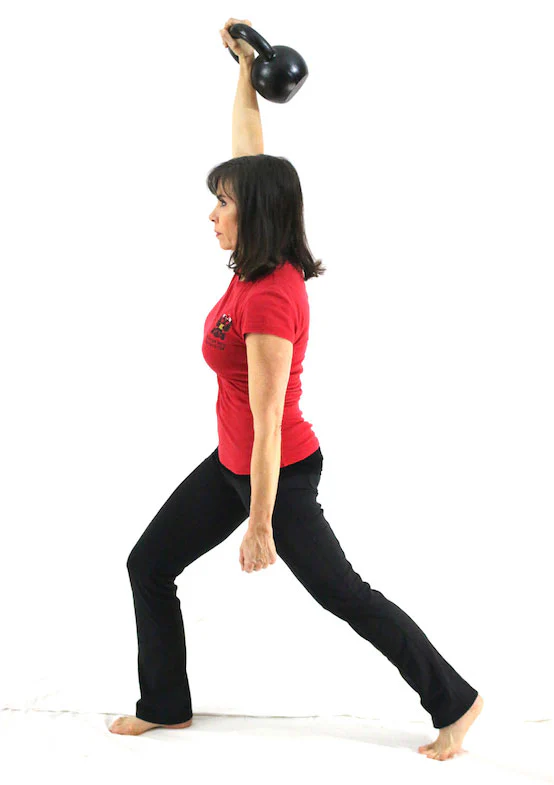
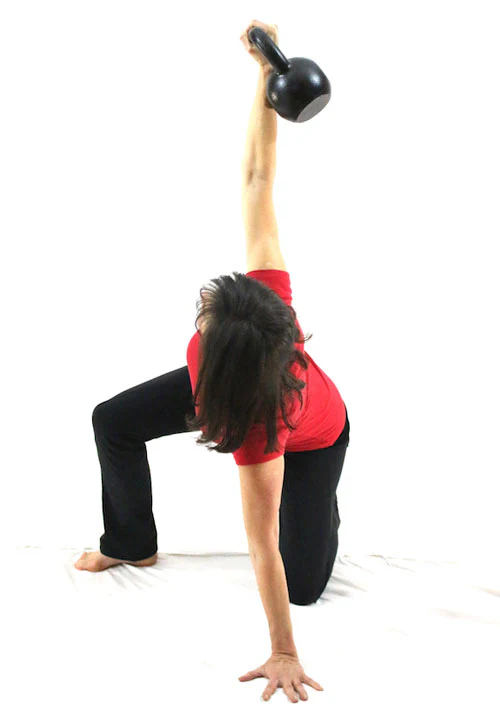
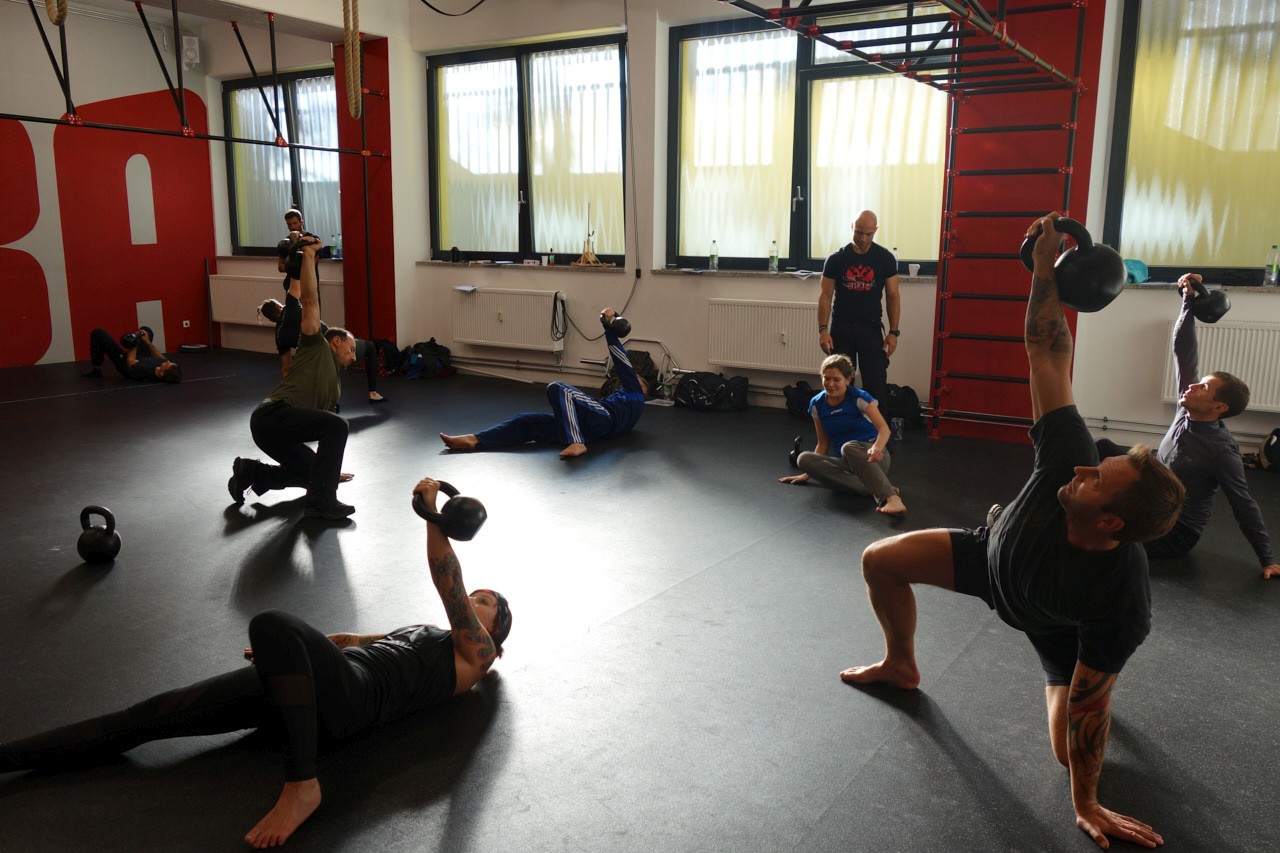
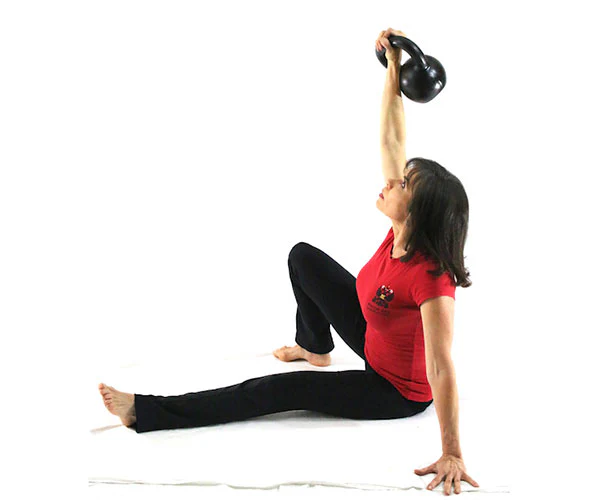
Der Get-Up, manchmal als Türkischer Get-Up bezeichnet, wurde nach der großen Tradition der türkischen Wrestler benannt, die diese Bewegung als Eingangstest verwenden. Er hat im neuen Jahrtausend durch die Bemühungen von Mitgliedern der RKC eine Wiedergeburt erfahren. Im einfachsten Sinne ist der Get-Up einfach das Aufstehen vom Boden mit einer Last und das Zurückgehen. Es kann mit vierzehn oder mehr separaten Schritten nach oben und vierzehn oder mehr nach unten genau durchgeführt werden. Irgendwo dazwischen werden wir den Get-Up lehren.