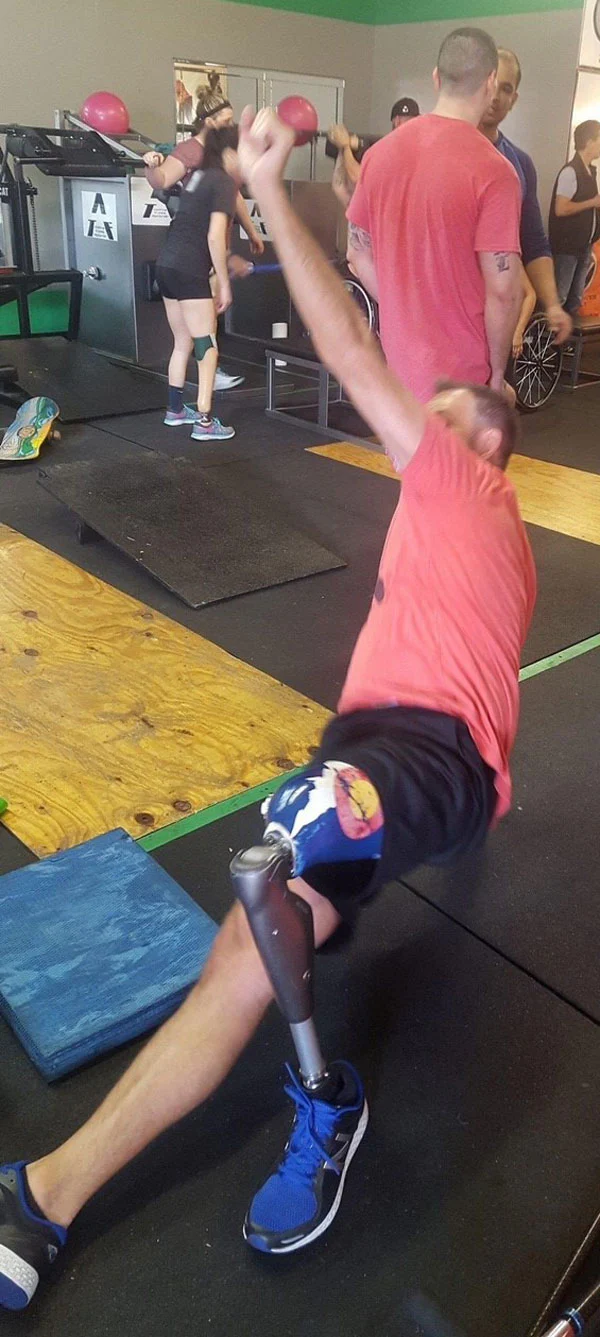
Ich betrieb mein Fitnessstudio basierend auf dem, was das FMS lehrte. Wir verwendeten den Functional Movement Screen als Teil unseres Einarbeitungsprogramms. Ich liebte die Ergebnisse, die wir bei Mitgliedern erzielten, die sich nicht so gut bewegten, wie sie sollten. Es begann meine Reise von der Strafverfolgung/Fitnessstudio-Besitzer zum Besuch der Chiropraktikschule. Ich wusste, dass ich mehr tun konnte, um Menschen mit den richtigen Qualifikationen zu helfen, und Chiropraktiker zu sein, war etwas, von dem ich wusste, dass es mir ermöglichen würde, mehr Menschen zu helfen, noch bessere Ergebnisse zu erzielen.
Die Fähigkeit, Bewegung zu betrachten und zu analysieren, half mir enorm in der Chiropraktikschule. Es erlaubte mir, jeden durch die Linse der Bewegung zu betrachten, anstatt nur die Verletzung zu sehen, die sie hereingebracht hatte. Ich besuchte die Zertifizierung zur Selektiven Funktionalen Bewegungsanalyse, während ich in der Schule war. Das ist die klinische Variante des Functional Movement Screen. Es ermöglichte mir, die Wurzelursache der Dysfunktion des Patienten zu identifizieren. Die RKC/FMS gab mir einen Vorteil in der Rehabilitation und bei der Verbesserung der Ergebnisse.
Ein paar Jahre später helfe ich immer noch Menschen mit besserer Bewegung und weniger Schmerzen mit Kettlebells. Kettlebells sind ein wesentlicher Bestandteil unseres Rehabilitationsprogramms. Sie nehmen wenig Platz ein und können von jedem verwendet werden. Sie ermöglichen es uns, unsere Patienten aufgrund der Herausforderung und des Spaßes, den die Verwendung der Kettlebell mit sich bringt, in ihre Rehabilitation einzubeziehen. Jeder, der hereinkommt, möchte versuchen, die 106 lb… aufzuheben.
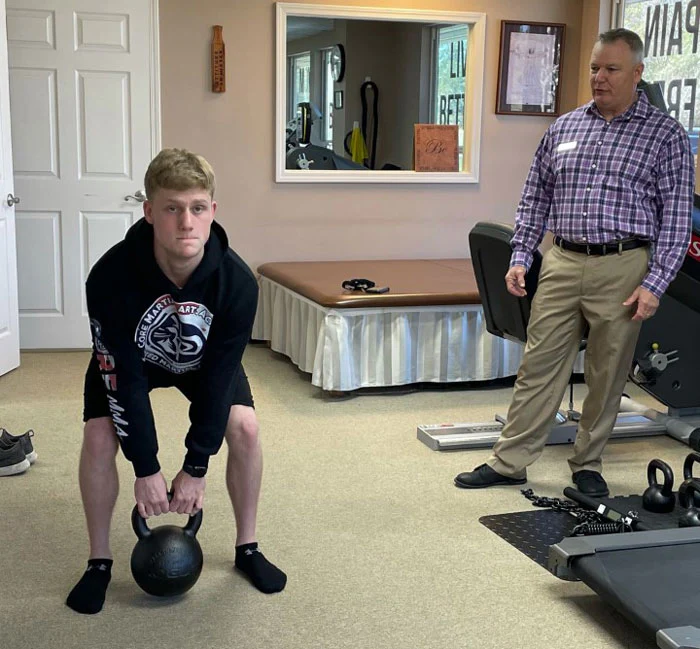
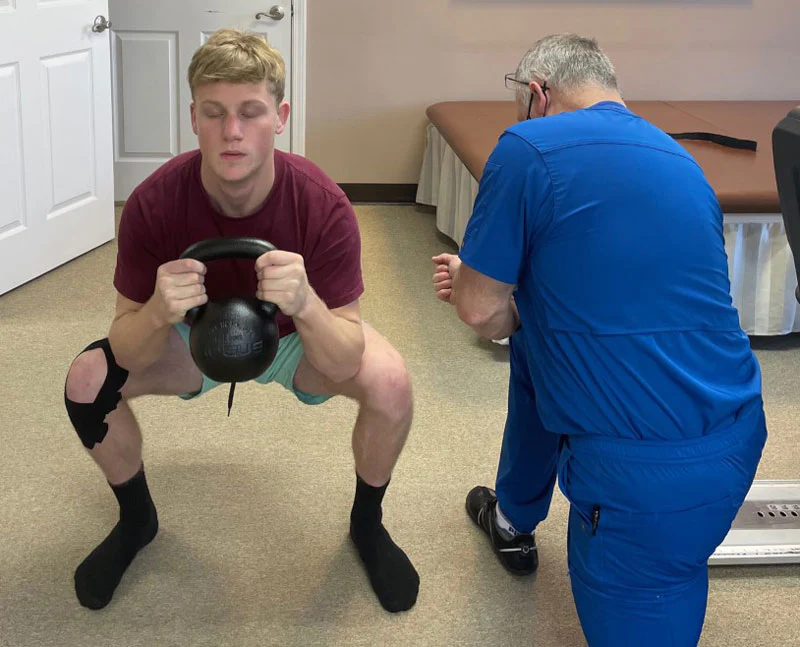
Wir verwenden die Fähigkeiten, die bei der Hardstyle Kettlebell-Zertifizierung (HKC) gelehrt werden, als unsere Grundlage für Rehabilitation und Stärkung. Man hört oft, dass der Swing, Get Up und Squat ziemlich genau das beheben, was einen plagt. Rate mal? Es ist wahr. Wir stellen fest, dass, wenn unsere Patienten diese drei Übungen beherrschen, ihre Aktivitäten des täglichen Lebens sowie jede außerschulische Aktivität mit wenig bis gar keiner Dysfunktion durchgeführt werden können. Können wir alles beheben? Nein, aber wir können ihnen helfen, ihr Leben zu verbessern und sie verletzungsresistenter zu machen.
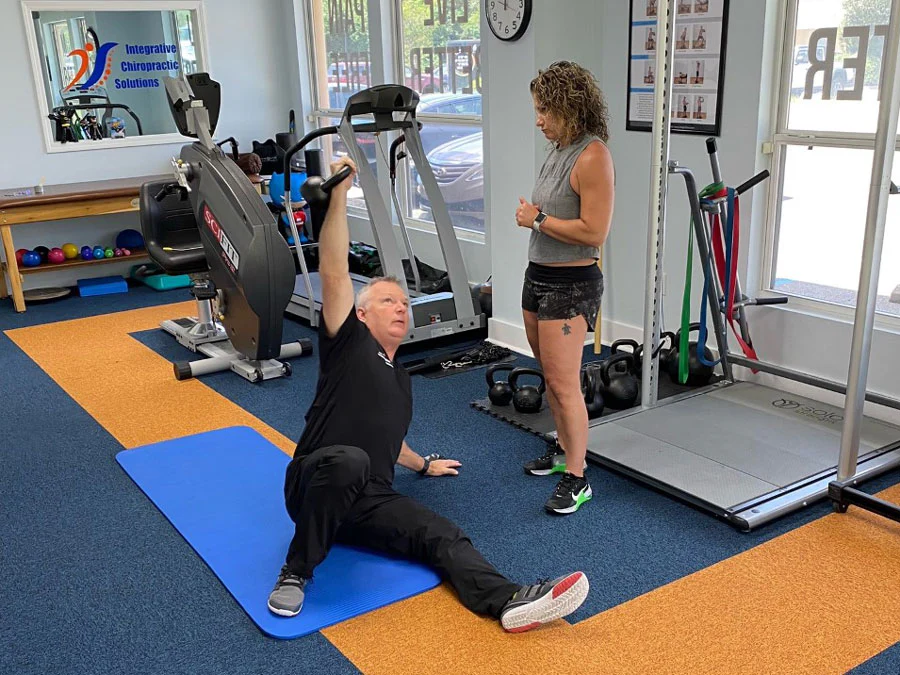
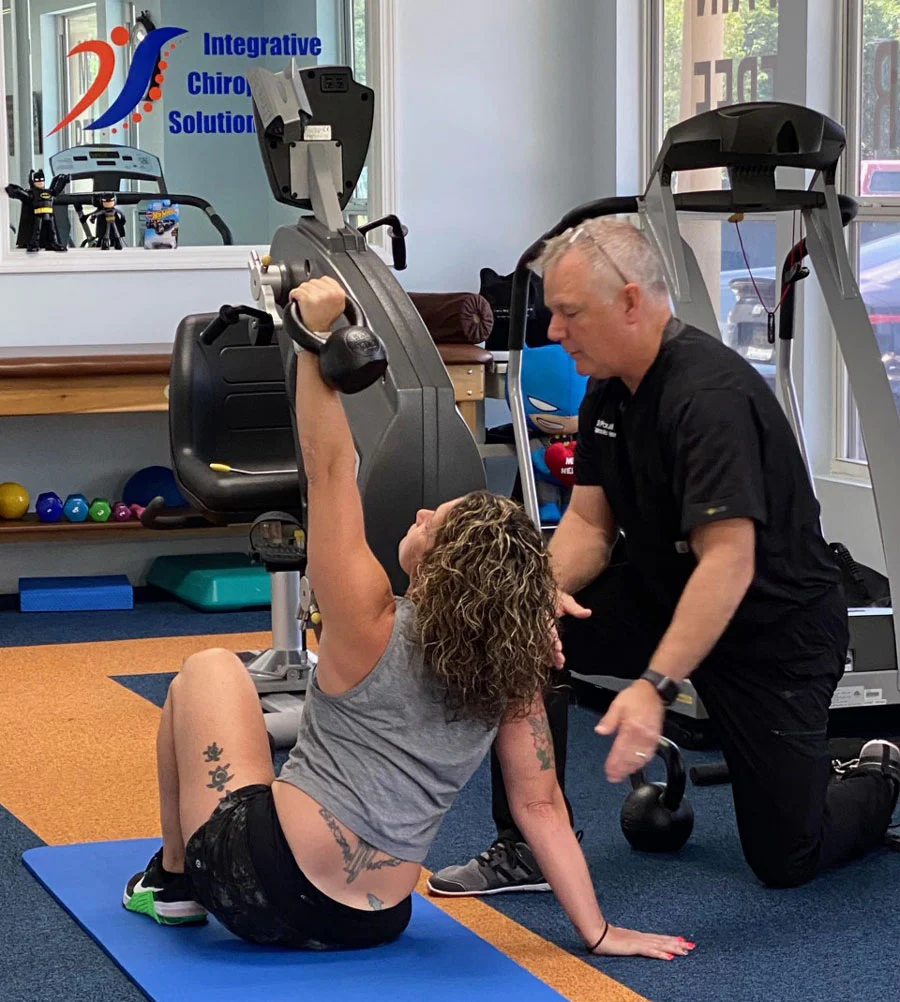
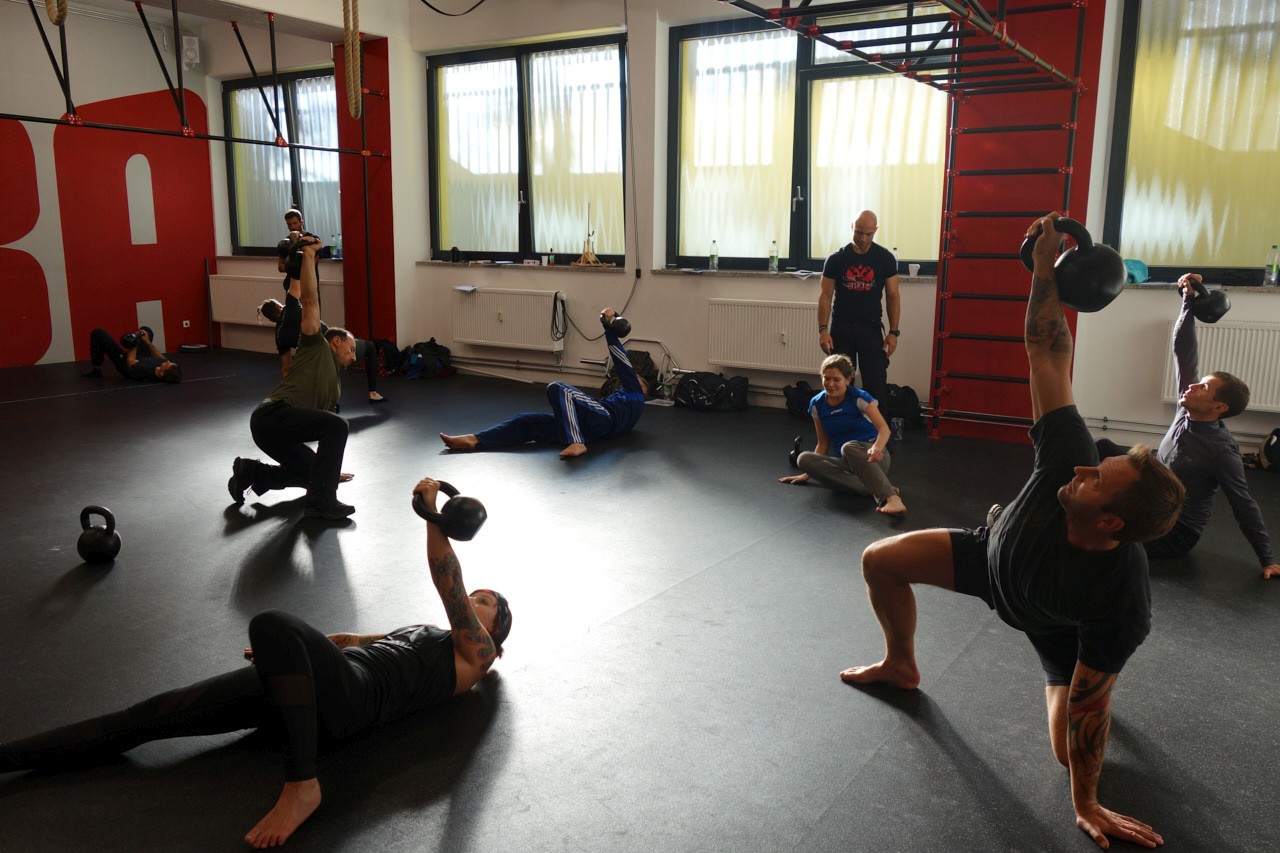
Einer unserer Patienten, ein CrossFit-Wettkämpfer, musste sich einer Schulteroperation wegen eines Risses unterziehen. Sobald wir in der Lage waren, die Schulter zu belasten und zu beanspruchen, begannen wir mit dem ungewichteten Get Up. Wir begannen mit dem Rollen zur Presse. Dies ermöglichte es uns, ihren Rumpf mit dem Rest ihres Körpers zu verbinden, nachdem sie sechs Wochen lang inaktiv gewesen war. Wir führten die Bewegung des Rollens zur Presse ohne Gewicht aus. Sie lag in der Fetalposition auf der Seite, rollte auf den Rücken und drückte vom Boden.
Sobald sie die Bewegung beherrschte, gingen wir zum Schulterpacken über. Wir verwendeten die supine Presseposition und zeigten ihr, wie man die Schulter packt. Wir erreichten dies, indem wir den Arm leicht nach oben und unten in der Presseposition drückten und zogen. Dies ermöglichte es ihr, die Bewegung zu spüren und wahrzunehmen, wie es sich anfühlen sollte, wenn es richtig gemacht wird. Wir zeigten ihr auch, wie sie ihre Faust in der Presseposition für Bewegung im Gelenk drehen kann. Dies diente dazu, Flüssigkeit in Bewegung zu bringen und dem Körper zu ermöglichen, zu spüren, was die Schulter tun sollte, wenn sie richtig funktioniert.