Diese Erkenntnis hat es mir endlich ermöglicht, die Punkte in Bezug auf das Halten der Hüften in einer neutralen Haltung für das Training zu verbinden. Wenn das Becken wie eine Schüssel mit Wasser ist, wollen wir stehen (und dehnen und uns allgemein bewegen), ohne dass das Wasser nach vorne, hinten oder zur Seite herausläuft. Die Nutzung dieser Vorstellung von einem Zylinder hilft auch immens bei der Hüftposition. Es ist wie die Geschichte von den drei Bären, man möchte „genau richtig“ stehen.
Während wir über Haltung sprechen, lass uns eine zusätzliche Erkenntnis über die gepackte Schulter hinzufügen. Manchmal ist es schwierig, den gepackten Arm erfahrenen Athleten beizubringen. Jahre der Kompensationen können einige Menschen davon überzeugen, dass ihre Schultern gepackt sind, während in Wahrheit ihre Fallen auf ihren Ohren sind! Glücklicherweise gibt es eine sehr einfache Lösung für dieses Problem:
Vor Jahren sagte mir Janis Donis, die berühmte Speerwerferin, dass alle Wurfbewegungen mit einer „offenen Achsel“ durchgeführt werden müssen, um die Schulter zu schützen. Diese Idee erhellte mein Diskuswerfen und hielt mich jahrzehntelang schmerzfrei. Tatsächlich sollte die gesamte Achsel für Wurfbewegungen exponiert sein. Sie sollte die Schulter nicht nach unten drehen oder verdrehen, eine Bewegung, die oft ein „Armwurf“ signalisiert.
Als ich mit immer mehr Jungs arbeitete, die Kontaktsportarten gespielt und wie Bodybuilder trainiert hatten, wurde das Unterrichten der gepackten Schulter mehr zur Pflicht. Zwischen den Verletzungen und dem Frankenstein-Training waren sich viele Athleten nicht bewusst, wo sich ihre Schultern befanden. Viele dachten: „Ist sie nicht direkt neben meinem Kopf?“
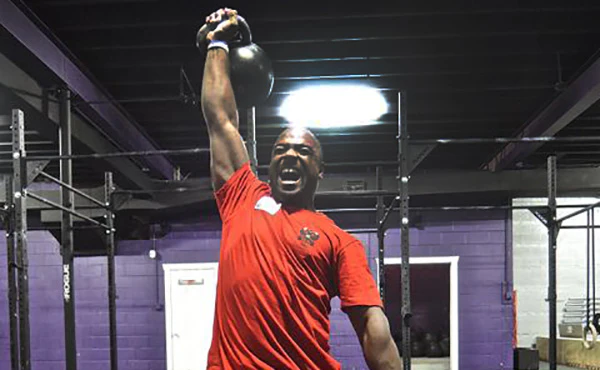
Mach dich bereit für meine Million-Dollar-Übung: Greife den Etikett an der Rückseite deines Hemdkragens. Für die meisten Menschen wird dies die Schulter „sofort“ packen. Jetzt müssen viele Menschen möglicherweise ein wenig weiter entlang der Wirbelsäule nach unten gleiten, um die Position zu erreichen, aber diese einfache Bewegung packt die Schulter „sofort“. Beachte, wie der Bizeps am Ohr ist? Das ist auch wahrscheinlich der am häufigsten gehörte Satz während der Kellner-Walks, bedenke, wie „offen“ die Achsel mit dieser einfachen Bewegung geworden ist. Halte nun die Schulter in dieser Position und strecke einfach den Arm. Jetzt haben wir die gepackte Schulter und die offene Achsel. Jetzt, da der Körper im Zylinder ist, ist es Zeit, die Kettlebell fallen zu lassen.
Lass uns drei Begriffe oder Bilder betrachten, die alle zu demselben kraftvollen schwingenden Hüftscharnier führen. Lass uns mit „Gieße den Krug“ beginnen. Wenn ich die Kettlebell gerade nach unten fallen lasse, ist mein Kopf der erste Kontaktpunkt. Mehrfach mit einer schweren Kettlebell auf den Kopf zu schlagen, ist NICHT optimal. Ja, zitiere mich gerne dazu. Offensichtlich müssen wir die Glocke nach vorne drücken. Aber, sie gerade in die Position des oberen Schwungs zu starten, ist auch nicht perfekt. Mit einer schweren Kettlebell kann der Athlet diese Bewegung einfach nicht ausgleichen, und der Athlet wird entweder nach vorne gezogen oder die Kettlebell könnte sogar Schaden oder Verletzungen verursachen—das ist eine Menge Kraft in einer schlechten Position!
Das erste Bild, das ich jemals für den richtigen Drop gehört habe, war „Gieße den Krug.“ Mit dem Daumen, der von der Lockout-Position führt, drehe einfach das Handgelenk und denke daran, Milch auf etwas Müsli zu gießen. (Denk nur an das Müsli, iss es nicht. Müsli ist für Kühe. Iss die Kuh stattdessen.) Aufgrund der Schwerkraft wird die Kettlebell anfangen, nach vorne zu fallen. Ich ermutige die Leute, sofort den „Mut“ zu bekommen, hier das Scharnier anzugreifen.
„Schwimmen“ ist ein weiterer Hinweis, der einigen Menschen hilft. Wie der Kraulstil, stelle dir vor, dass du die Glocke entlang der Mittellinie des Körpers nach unten bringst, als würdest du im Pool Bahnen schwimmen. Dieses Bild machte für mich sofort Sinn, denn der richtige Kraulstil wird nicht mit einem gestreckten Arm oder einem genau vorgeschriebenen Winkel ausgeführt, der Ellenbogenwinkel „hängt“ von vielen Faktoren ab. Das Gleiche gilt für den Kettlebell Snatch. Ich mag diesen Begriff auch, weil er veranschaulicht, dass dies eine dynamische Bewegung ist, nicht nur ein einfacher freier Fall.
„Reiß den Reißverschluss auf“ ist ein Satz, den ich bei meinem RKC in San Jose gehört habe. Einfach gesagt, man sollte daran denken, einen Reißverschluss aufzumachen. Wieder gibt es keine nationale Reißverschlussrichtlinie, sodass es mehrere Möglichkeiten geben wird, diese Aufgabe zu erfüllen. Denke immer daran, das Scharnier anzugreifen.
Etwas, das ich immer wieder von RKC-Kandidaten höre, die den Snatch-Test NICHT bestehen, ist die folgende Art von Aussage:
„Nun, ich habe beim ersten Versuch des Tests 30 Wiederholungen gemacht, dann auf 54 mit der 24kg Kettlebell aufgebaut. Ich hatte gehofft, dass die Energie und Begeisterung der Gruppe mir die letzten 46 Wiederholungen bringen würden.“
Ich glaube, dass du zum RKC kommen solltest, bereits in der Lage zu sein, 100 Wiederholungen des Snatch zu machen. Das bedeutet jedoch nicht, dass jedes Training mit der Kettlebell des Snatch-Tests durchgeführt wird. Monate vor dem RKC empfehle ich oft, dass der Kandidat leichtere Kettlebells verwendet—so leicht wie 12kg für Männer—und mehrere Sätze von 100 im Training macht. Ich denke, es hilft, sich an 100 Wiederholungen zu gewöhnen.
Kürzlich habe ich eine kleine Herausforderung gemacht, bei der ich 100 Wiederholungen mit der 24kg Kettlebell machen musste. Bei 18 Wiederholungen lächelte ich. Später wurde ich gefragt: „Warum hast du gelächelt?“ Nun, das liegt daran, dass ich dieses System benutze:
- 20 Wiederholungen mit meiner linken Hand
- 20 Wiederholungen mit meiner rechten.
- 15 links
- 15 rechts
- 10 links
- 10 rechts
- 5 links
- 5 rechts
Dieses System ergibt insgesamt 100 Wiederholungen mit nur sieben Handwechseln. Bei 18 Wiederholungen denke ich, dass ich nur noch zwei Wiederholungen mit meiner schwachen Hand habe und dann meine starke Hand benutzen kann. In meinem Kopf bringen mich die ersten zwanzig Wiederholungen über den schwierigen Teil! Die nächsten achtzig Wiederholungen werden das Dessert sein.
Aber wenn du nicht den Mut hast, die Kettlebell aktiv für jede einzelne Wiederholung fallen zu lassen, wird jede Wiederholung zur Hölle.
****