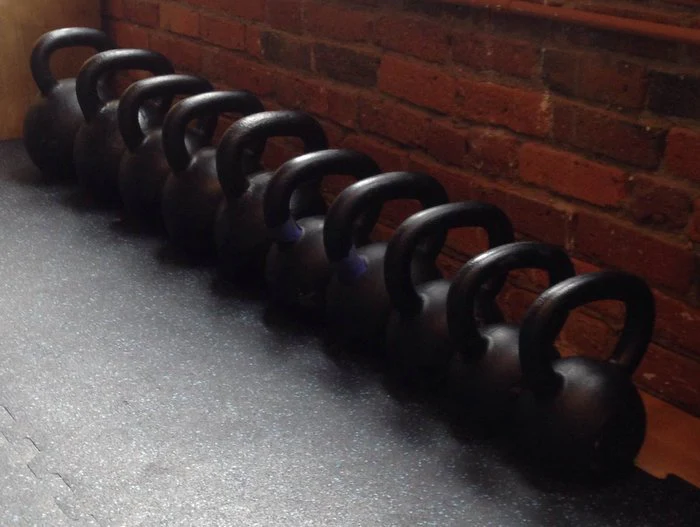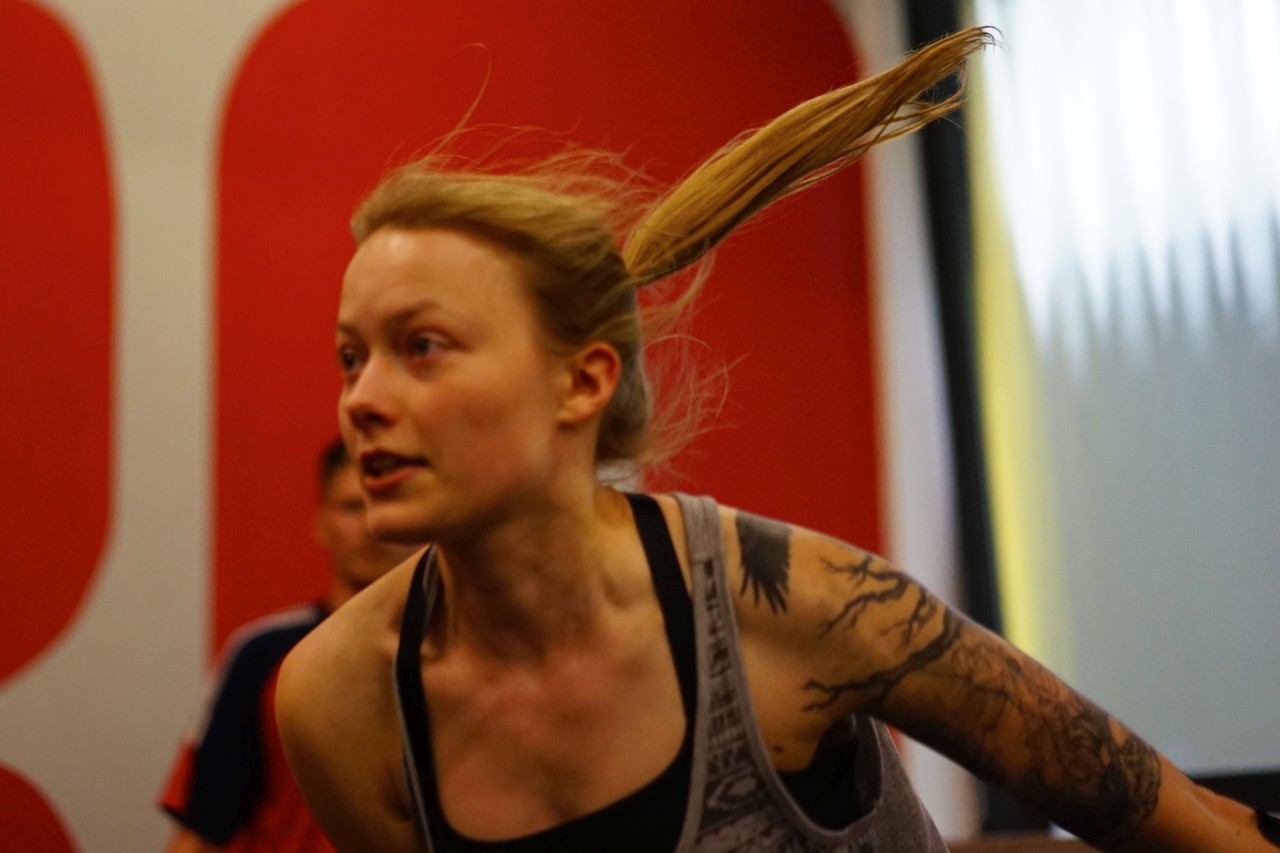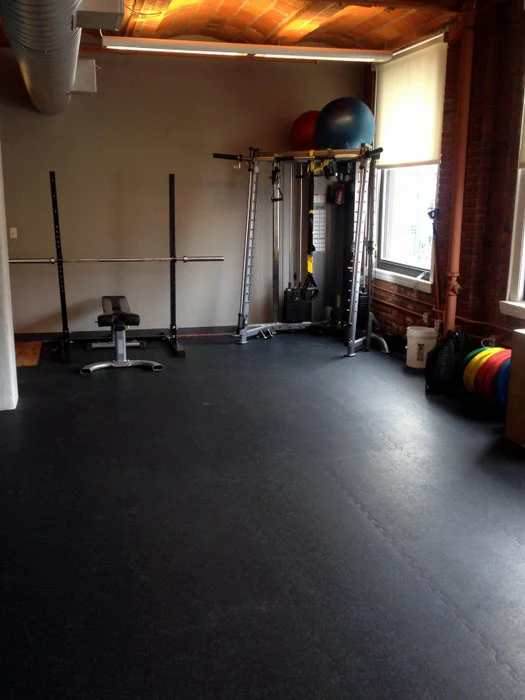
Dan Mahoney, RKC-II trainiert seine Unternehmensklienten in diesem Fitnessstudio im Büro in Downtown Boston.
Einen Plan umsetzen und zum Handeln aufrufen
Ein Aufruf zum Handeln und ein Buy-in-Prozess waren meine erste Priorität. Ich traf mich mit so vielen Menschen wie möglich für ihre individuellen Bewegungsanalysen, um ihre persönlichen Ziele zu besprechen und herauszufinden, wie sie dachten, dass ich ihrer Abteilung und dem Unternehmen als Ganzes helfen könnte. Als ich meine Notizen zusammenstellte, sah ich deutlich, dass mein Instinkt richtig war – Kettlebells würden dieser Gruppe zweifellos zugutekommen. Sie alle benötigten und wollten allgemeine Kraft und Konditionierung und wollten die Pfunde loswerden. Die älteren Mitarbeiter, die möglicherweise eine kürzliche Verletzung hatten oder mit chronischen Schmerzen zu kämpfen hatten, wollten diese Schmerzen loswerden. Also brachte ich in der nächsten Woche zweiundzwanzig meiner persönlichen Kettlebells (die von 12 kg bis 48 kg reichten) ins Büro-Fitnessstudio. Ich bekam mehr als ein paar verwirrte Blicke, während ich durch die Straßen von Downtown Boston ging!
Als RKC wusste ich, dass nicht jeder sofort bereit für Schwünge sein würde, und ich erwartete nicht, dass sie einfach einsteigen und vom Boden aus Kreuzheben. Zunächst war das Wichtigste, dass sie die Idee akzeptierten, dass richtiges Training und die Verbesserung ihrer Bewegungsweise vorteilhafter waren, als eine Stunde lang durch den Fleischwolf gedreht zu werden. Alle erwarteten, dass eine Sitzung sie in einem Schweißpool zurücklassen würde und dass sie am nächsten Tag schlimmer aufwachen würden als am Tag zuvor. Da sie dachten, dass Fitness nur darin besteht, am Ende der Trainingseinheit nach Luft zu schnappen, erwarteten sie, schweißnass, wund und begraben zu sein!
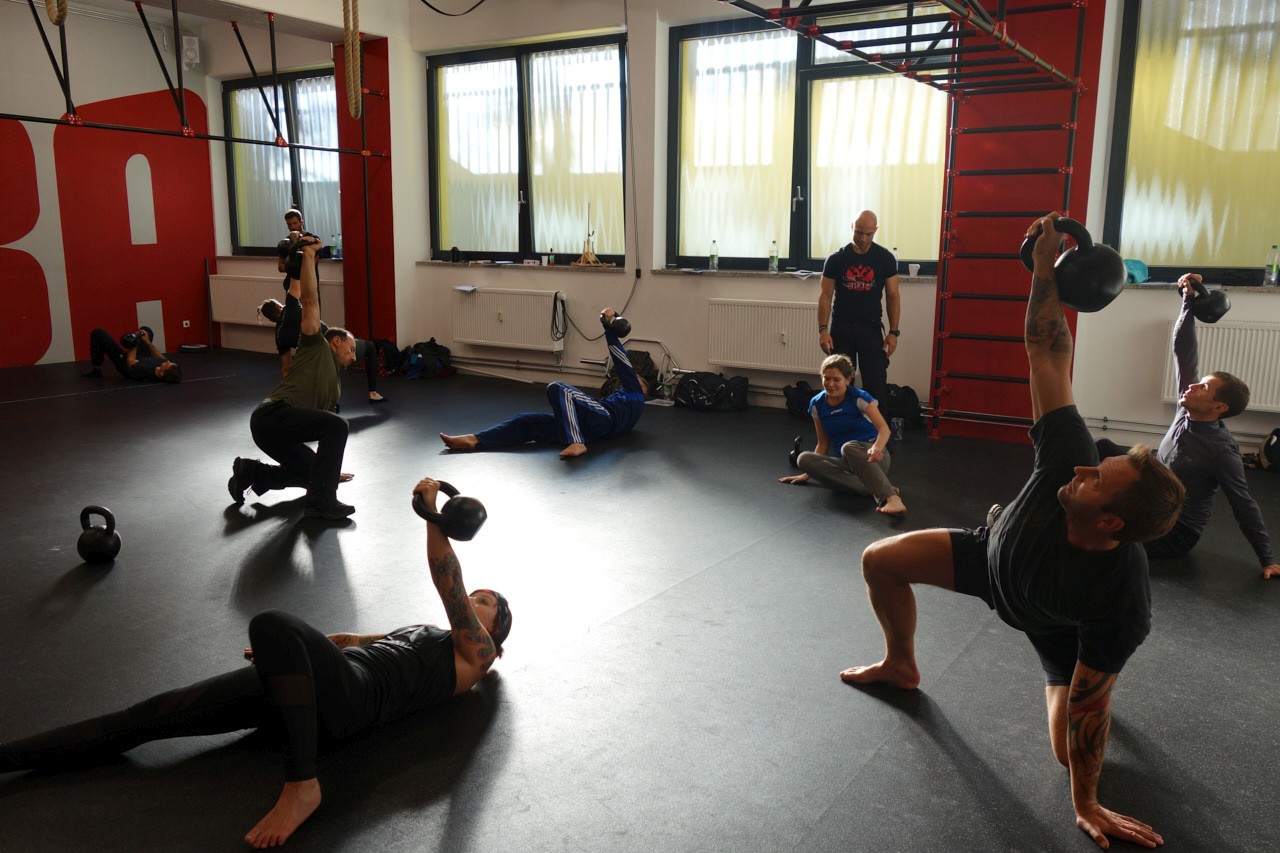
Das RKC-System hat den Mitarbeitern ein neues Verständnis für die Vorteile des tatsächlichen Trainings vermittelt und vermittelt weiterhin. Bis heute konnte ich die großen sechs des RKC (Swing, Squat, Clean, Press, Get-up und Snatch) mit einigen der fortgeschritteneren und engagierten Mitarbeiter integrieren, während die neuen und intermediären Mitarbeiter weiterhin von Kreuzheben, Schwüngen, Kniebeugen, Get-ups und leichtem einarmigem Drücken profitieren. Sie haben Großes erreicht – von der 24 kg Presse bis hin zu Pistolen. Unser CEO – der zunächst nicht ganz verstand, warum ich ihn zum Schwung oder zu Get-ups brachte – hat eine hohe Dosis an Get-ups, Schwüngen, Armbar und anderen Mobilitätsübungen erhalten, die ich während meiner RKC-II gelernt habe.
Das Ziel des Gesundheits- und Wellnessprogramms ist nicht einfach, die Menschen so stark wie möglich zu machen, obwohl einige von ihnen wirklich hervorragende Leistungen erbringen. Unser Ziel ist es, eine angenehme, gesunde Atmosphäre zu schaffen, in der die Menschen bestrebt sind, sich sowohl auf persönlicher als auch auf beruflicher Ebene zu verbessern. Ebenso wichtig ist es, dass ich jeden Mitarbeiter dazu anleite, Bewegungen sicher und erfolgreich auszuführen, die ihre Fitness und Lebensqualität verbessern.
Ich fordere alle RKC-Instruktoren auf, nach Möglichkeiten zu suchen, ihre Coaching-Fähigkeiten außerhalb von Fitnessclubs, Fitnessstudios und Studios herauszufordern – und die RKC-Botschaft an diejenigen zu verbreiten, die sonst möglicherweise nicht die Gelegenheit haben, sie zu erleben. Ich habe in den letzten neun Monaten mehr über mich als Coach gelernt als je zuvor in einem herkömmlichen Fitnessstudio. Ich erweitere weiterhin meine Komfortzone, um Situationen einzubeziehen, wie zum Beispiel vor dem Unternehmen zu sprechen, mit neuen Problemen umzugehen, die von verschiedenen Mitarbeitern präsentiert werden, und zu lernen, wie man Beziehungen aufbaut, die letztendlich mein eigenes Geschäft wachsen lassen werden.
****