Es gibt viele Philosophien, wenn es darum geht, die Leistung zu verbessern und Trainingseffizienz zu meistern. Der folgende Beitrag handelt von zwei Dingen, die mein Leben komplett verändert haben.
Teil 1: Fundamentale menschliche Bewegungen
Als ich vor ein paar Jahren im Internet auf Kettlebells stieß, kam mir eines in den Sinn – Kettlebell-Training ist immer Training des gesamten Körpers. Damals, wie viele andere, trainierte ich isolierte Muskeln und fand es okay, dies etwa zehn Jahre lang zu tun. Als ich von „Ganzkörpertraining“ hörte, dachte ich sofort an Trainingspläne für Anfänger. In jedem Forum schien es, als würden Anfänger ihr Training mit Ganzkörperübungen beginnen und später zu Split-Training wechseln. Die beliebtesten Splits waren Brust und Bizeps. An bestimmten Tagen greift man nur die Bizeps- und/oder Brustmuskeln schön isoliert mit vielen Übungen an.
Durch ständige Recherchen über Kettlebell-Training stieß ich eines Tages auf Dan Johns Die fundamentalen menschlichen Bewegungen. Seine Philosophie drehte sich plötzlich um das Training von Bewegungen anstelle von Muskeln.
Trainiere Bewegungen statt Muskeln!
Zunächst ergab das für mich überhaupt keinen Sinn. Wie genau soll ich Bewegungen trainieren? Es dauerte eine Weile, bis ich verstand, worüber er schrieb, und die Vorteile dieser Trainingsphilosophie. Wie könnten diese Bewegungen alles sein, was du brauchst, um fitter zu werden als der durchschnittliche Joe oder Jane?
Hier ist das „Geheimnis“:
Die fundamentalen Bewegungen sind drücken, ziehen, beugen, hocken und Lasten tragen.
Aber ist das nicht ein weiterer Split und trainierst du wieder isolierte Muskeln? Nicht wirklich. Schau dir die empfohlenen Übungen für jede Bewegung an und du wirst sehen, dass dein gesamter Körper immer einbezogen und trainiert wird, nur der Fokus ändert sich. Hier sind diese fundamentalen Bewegungen und einige Übungsbeispiele:
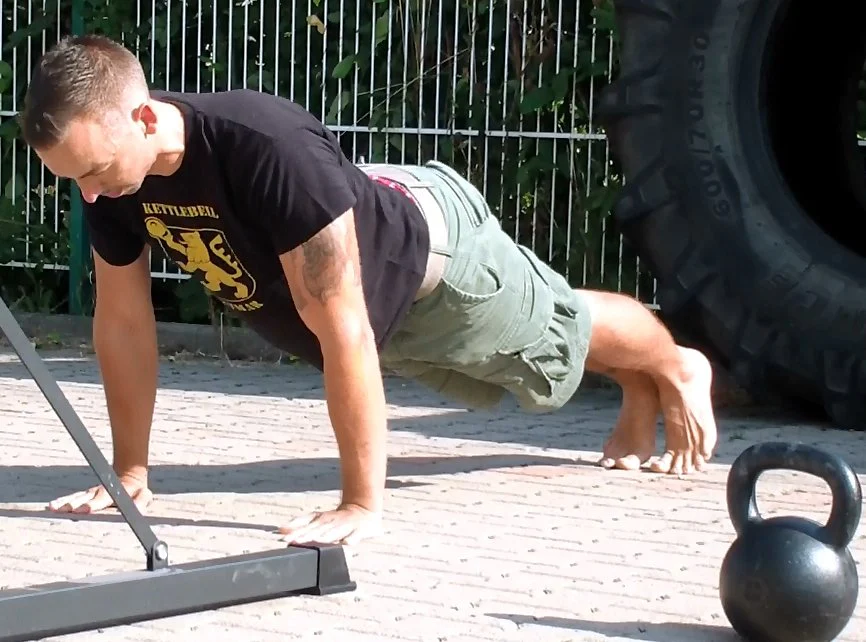
Drücken: Liegestütze, Militärpresse, Push Press,
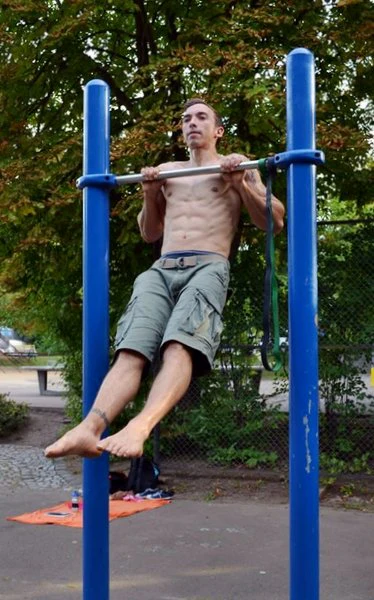
Ziehen: Rudern, Klimmzüge
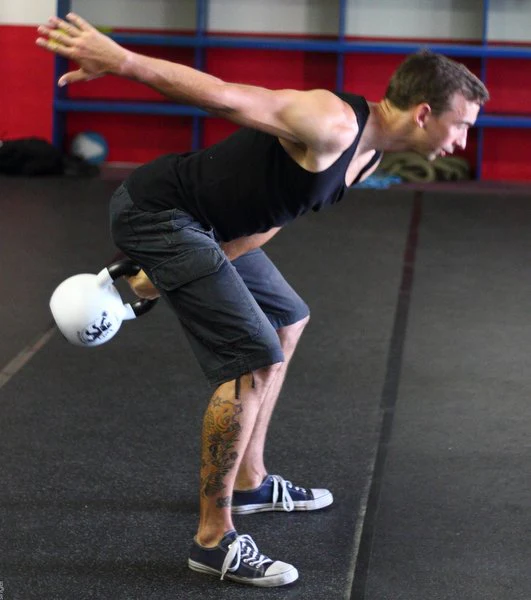
Beugen: Beugen mit zusätzlichem Gewicht (Sandbag, Kettlebell usw.), Kreuzheben, einbeiniges Kreuzheben, Kettlebell-Swing, Clean, Snatch, Sprünge (vertikal und horizontal)
Hocken: Goblet Squat, Front Squat mit Kettlebells, Kniebeugen mit Langhanteln
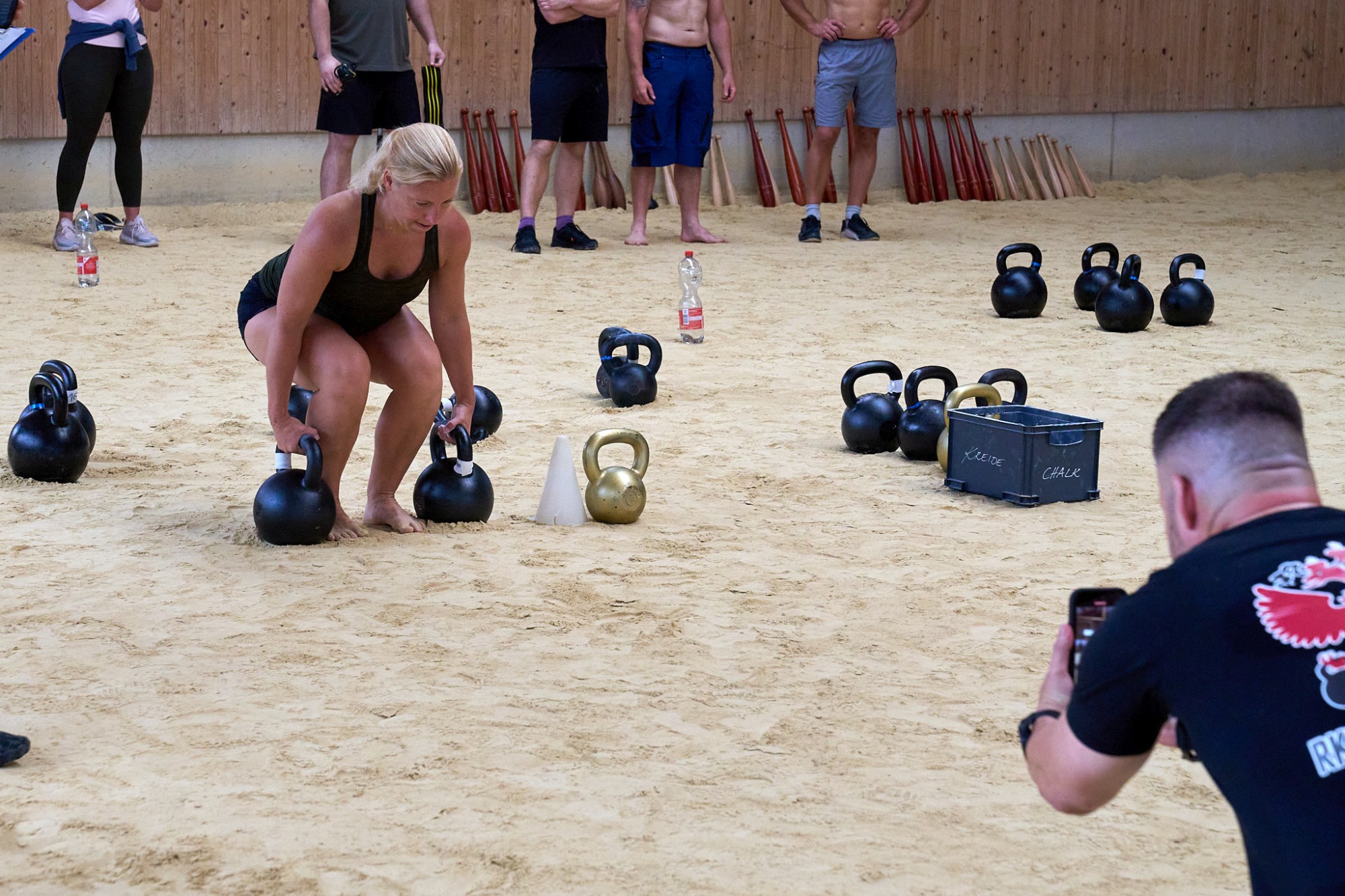
Lasten tragen: Kellnergang, Koffertragen, Rack Walk, Press Walk, Farmer's Walk, Double Rack Walk, Ziehen oder Schieben von Schlitten, Autos usw.
Wie du dir vorstellen kannst, werden „Drücken“-Übungen von allen bevorzugt. Bankdrücken ist wahrscheinlich die Lieblingsübung vieler Menschen und hat leider immer Vorrang vor Kniebeugen, Klimmzügen und Beugen. Schau dich einfach in deinem lokalen Fitnessstudio um und versuche herauszufinden, welche Maschine am häufigsten genutzt wird.
Für die meisten Menschen, die zum ersten Mal von den fundamentalen Bewegungen hören, ist es jetzt an der Zeit, wieder ins Gleichgewicht zu kommen. So ging es mir am Anfang auch. Dan John empfiehlt, die fundamentalen Bewegungen folgendermaßen zu priorisieren:
- Lasten tragen
- Hocken
- Beugen
- Ziehen
- Drücken
Er argumentiert, dass er dein Leben mit Lasten tragen in drei Wochen verändern kann. Hier ist ein Beispiel: In seinem Buch Intervention beschreibt er einen Klienten, der bereits kurz davor war, alle fundamentalen Bewegungen zu meistern. Dan John konnte ihm nur hier und da ein wenig über einige Bewegungen beibringen. Aber als es um das Tragen von Lasten ging, stellte sich heraus, dass dieser Athlet damit nie trainiert hatte. Also arbeiteten sie gemeinsam an den Lasten und die Ergebnisse waren extrem in sehr kurzer Zeit. Gegen Ende meiner „traditionellen“ Trainingszeit in einem Fitnessstudio brachte ich immer meine eigene Kettlebell mit. Ich arbeitete in einem Studio als Trainer für Rehabilitation und jedes Mal, wenn ich mit der Arbeit fertig war, holte ich zwei Kettlebells und trug sie durch das Studio. Ich trainierte abends und die Mädchen und Jungs auf ihren Ergometern schauten mich immer verwirrt an!
Aber damals erkannte ich, dass ich die gleichen Leistungsverbesserungen erzielte, die Dan John in seinem Buch beschreibt. Das ist einer der Gründe, warum ich mich in das Kettlebell-Training verliebte und wie diese Trainingsphilosophie mein Leben veränderte.
Aber du musst nicht nur eine Kettlebell tragen! Geh raus und suche nach etwas, das du heben und tragen kannst, und dann mach es! Mach das drei Wochen lang und schau, ob sich dein Leben verändert.
Teil II: Training in entgegengesetzten Bewegungsrichtungen