Versuche dir eine Übung vorzustellen, die dein Leben einfacher machen könnte – eine „magische“ Übung, die deine Reaktion auf alltägliche Herausforderungen verbessert und dich zu einem besseren Menschen machen kann? Würdest du sie in dein Training einbeziehen?
Diese Übung gibt es, es ist der Kettlebell Turkish Get-Up.
Seit mehr als vier Jahren mache ich mindestens einmal pro Woche schwere Turkish Get-Ups mit Kettlebells. Neben dem Hardstyle Kettlebell Swing ist der Turkish Get-Up eine Grundübung im RKC Kettlebell Training und einer der Gründe, warum ich mit Kettlebells trainiere.
Obwohl es purer Spaß ist und ständig neue Trainingsreize bietet, wurde ich im Laufe der Zeit auf die anderen Vorteile des Get-Ups aufmerksam, die auch auf das Leben im Allgemeinen zutreffen.
- Du musst flexibel sein und an deinen Schwächen arbeiten
- Du wirst lernen, dich für den nächsten Schritt vorzubereiten, anstatt einfach stehen zu bleiben
- Je mehr Widerstand du begegnest, desto stärker wirst du
- Konstanz und Disziplin zahlen sich immer aus
- Training ist Leben
Das sind alles Dinge, die du realisieren musst, wenn du an einem soliden und starken Turkish Get-Up arbeitest, und diese gleichen Ideen helfen auch im Alltag.
Sei flexibel und arbeite an deinen Defiziten
Wenn du darüber nachdenkst, einen Turkish Get-Up mit der Hälfte deines Körpergewichts auszuführen, muss alles passen. Du musst flexibel und stabil in deinen Gelenken sein und die notwendige Kraft haben – zusammen mit einem starken Willen.
Wenn eines dieser Dinge problematisch ist, wird es sich vielfach auszahlen, wenn du an diesem Defizit arbeitest. Andernfalls wirst du wahrscheinlich irgendwann bei einem bestimmten Punkt oder Gewicht stagnieren.
Zwei persönliche Beispiele:
Bei Turkish Get-Ups war meine Beweglichkeit der Brustwirbelsäule immer ein Problem, aber jetzt ist sie fast perfekt, weil ich lange gezielt daran gearbeitet habe.
Eine andere Sache – als ich vor über fünf Jahren mit dem Kettlebell-Training begann, war die englische Sprache ein großes Problem für mich. Es gab praktisch keine Artikel über Kettlebells, die auf Deutsch geschrieben waren. Sogar jetzt lese ich fast ausschließlich auf Englisch, und nicht nur über Training. Jetzt habe ich viele Zertifikate auf Englisch abgeschlossen und sogar ganze Trainingseinheiten auf Englisch gehalten. An diesen Defiziten zu arbeiten hat sich sehr gut ausgezahlt und mich viel besser gemacht.
Lerne, dich für den nächsten Schritt vorzubereiten, anstatt einfach stehen zu bleiben
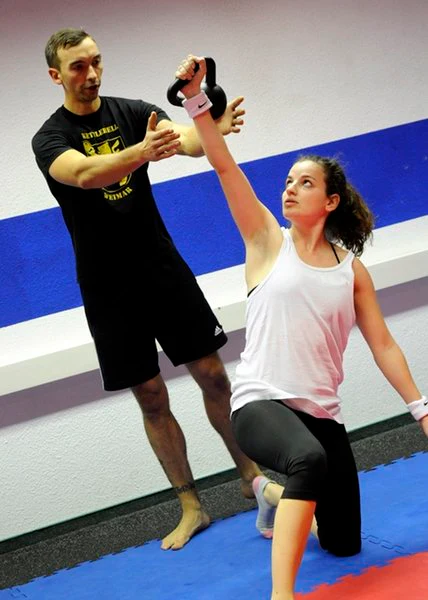
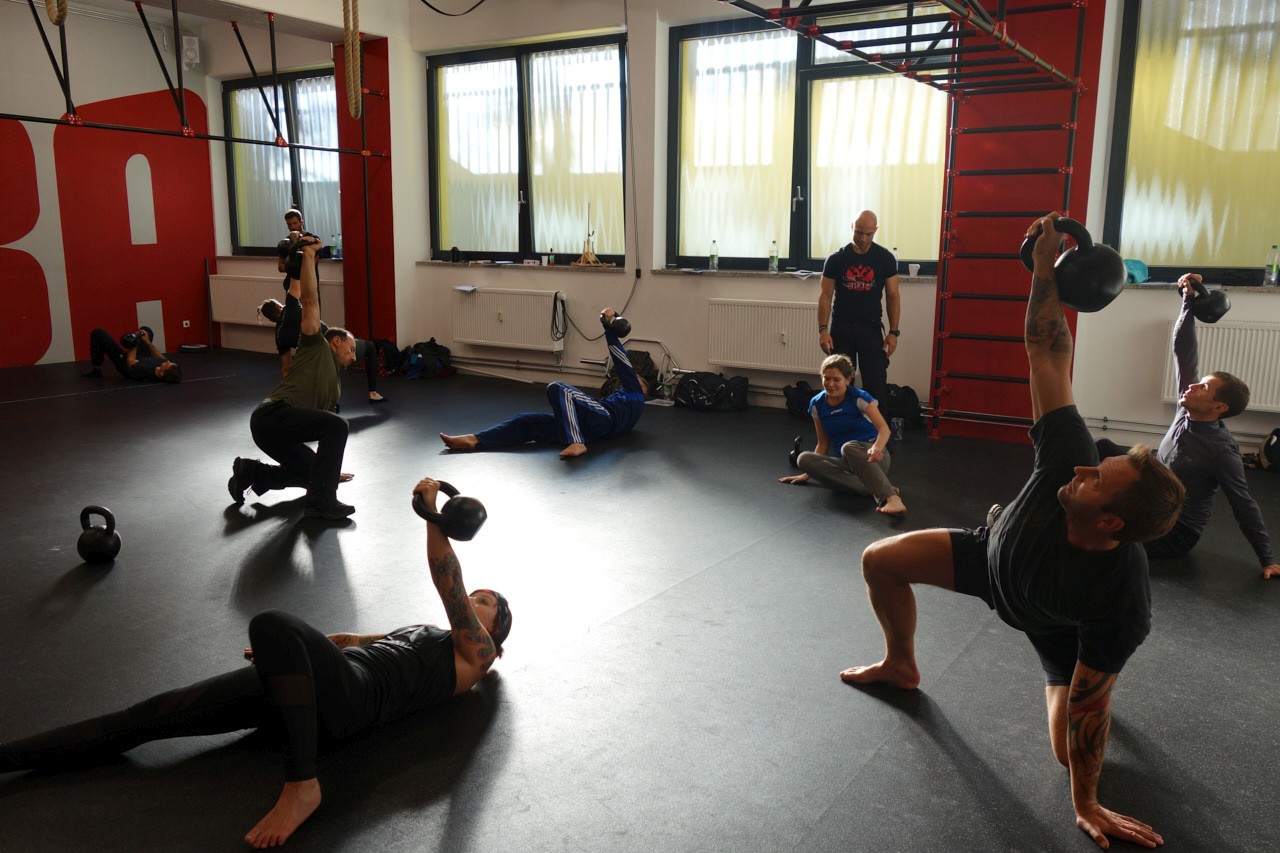
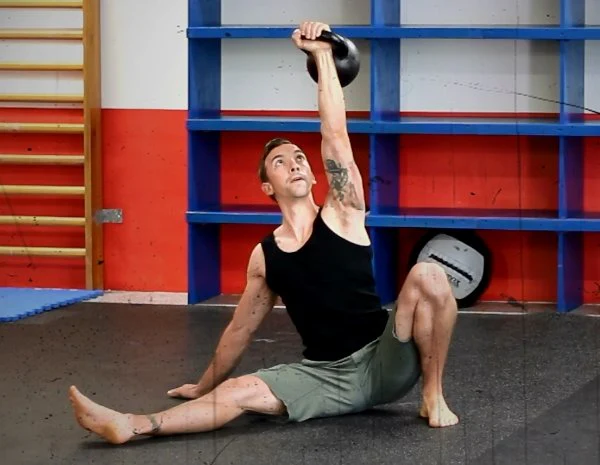
Schließlich musst du nach dem Floor Press (du hast die Kettlebell mit deinem Arm über deinen Kopf gedrückt) entscheiden, ob du aufstehen oder stehen bleiben möchtest. Wenn du dich entscheidest, aufzustehen, hast du viele anstrengende Schritte vor dir. Du musst dich von einer liegenden in eine stehende Position mit einer Kettlebell über deinem Kopf bringen, was es dir erschwert. Es gibt keine Ausgänge und keine Abkürzungen.
Das Gleiche gilt im Leben. Wirst du stillstehen oder den nächsten Schritt nach vorne machen? Eines ist sicher, je mehr Widerstand du begegnest, desto mehr zahlt es sich normalerweise aus, wenn du weitergehst. Das führt uns zu unserem nächsten Punkt…
Je mehr Widerstand du begegnest, desto stärker wirst du
Wenn du ein schwereres Gewicht mit deinem Turkish Get-Up verwendest, wirst du stärker. „Progressive (Kapazitäts-)Überlastung“ sind die magischen Worte mit diesem Konzept. Wenn du ständig mit dem gleichen Gewicht arbeitest, wirst du dich daran gewöhnen, und es wird keine Herausforderung mehr sein. Dein Körper wird keine neuen Reize erhalten, um ihn zu zwingen, stärker zu werden. Deine Kraft wird stagnieren, weil es keinen Grund für deinen Körper gibt, sich an eine neue Aufgabe anzupassen.
Es steckt etwas Wahres in dem deutschen Sprichwort: „Du wächst mit deinen Aufgaben“. Wenn du aufhörst, neuen Herausforderungen im Leben zu begegnen, wirst du aufhören zu wachsen. Natürlich ist es schön und sicher in deiner Komfortzone, aber das bedeutet nicht, dass du dich darin bequem machen solltest.
Schwere Turkish Get-Ups werden größtenteils außerhalb deiner Komfortzone liegen, und das Gefühl, diese Herausforderungen zu meistern, ist großartig. So ist es auch im Leben!
Konstanz und Disziplin zahlen sich immer aus
Ich möchte ehrlich zu dir sein, einen Turkish Get-Up mit der Hälfte deines Körpergewichts zu erobern, wird nicht über Nacht geschehen. Du musst auf jeden Fall ausdauernd sein. Wenn du davor keine Angst hast, wird es sich letztendlich auszahlen, garantiert! Es wird Tage geben, an denen es dir schwerfallen wird, und Tage, an denen alles leicht von der Hand geht. Das Wichtigste ist, beharrlich zu bleiben. Der beste Teil davon ist die Reise selbst – dein Weg, deine persönlichen Rekorde und der Moment, in dem du die kleinen Verbesserungen auf dem Weg zu deinem Ziel realisierst.