Warum trainieren?
Warum trainierst du? Einer der Gründe, den ich oft höre, ist: „Ich möchte meinen Kern stärken“. Um dies zu tun, machen viele Menschen Übungen (oder wühlen herum), während sie auf einer instabilen Oberfläche wie einem Wackelbrett oder einem Bosu-Ball stehen.
Eine weitere beliebte Technik zur Entwicklung eines starken Kerns ist die Planke. Ich bin ein großer Fan der Planke, da sie die Prinzipien von Verbindung, Verknüpfung, Spannung, Verlängerung usw. demonstriert. Allerdings wird dich das viele, viele Üben der Planke wirklich gut darin machen, die Planke zu machen. Dies ist besonders wertvoll, wenn du fürchtest, dass du in einem schmutzigen Ort mit Spinnen und Schlangen auf dem Boden fallen könntest und du diese Position (etwa 20 cm über dem Boden) halten und für längere Zeit sehr still sein musst.
Ein starker Kern, der nur stark ist, während du stationär bist, ist ziemlich nutzlos. Du brauchst einen Kern, der stark sein kann, während du in Bewegung bist. Das erfordert zwei Dinge:
- Ein Kern, der gegen Belastungen aus verschiedenen Richtungen resistent ist, und
- Die Fähigkeit, deine Arme und Beine zu benutzen, während dein Kern stabilisiert ist.
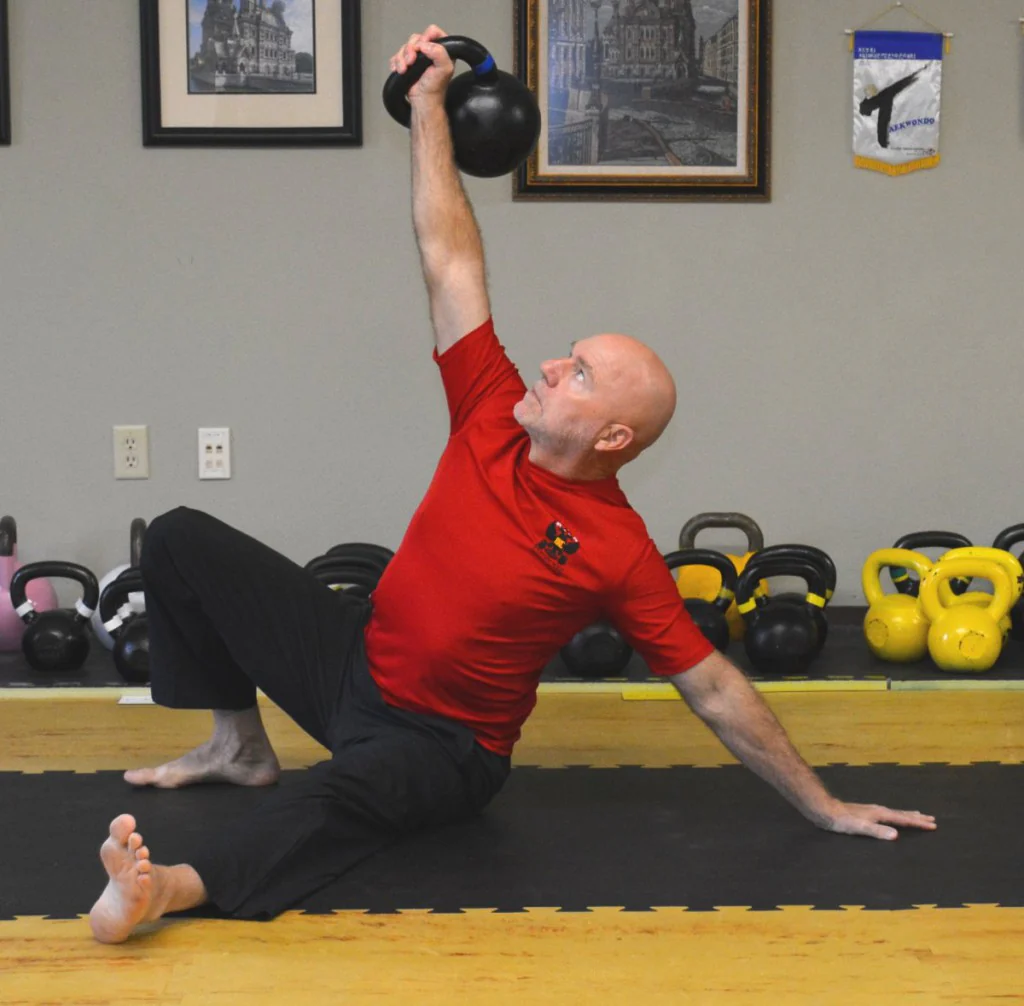
Hier kommt der Türkische Getup ins Spiel.
Stabilität in Bewegung
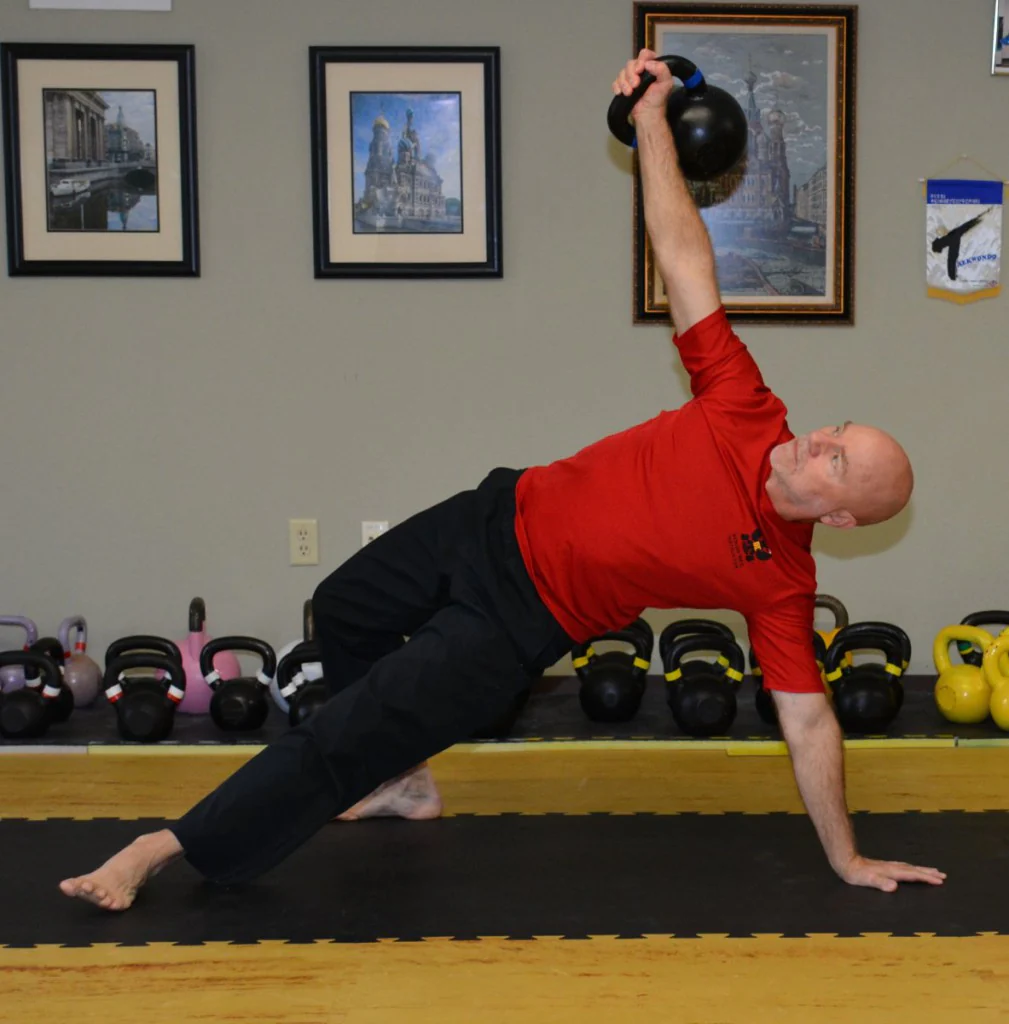
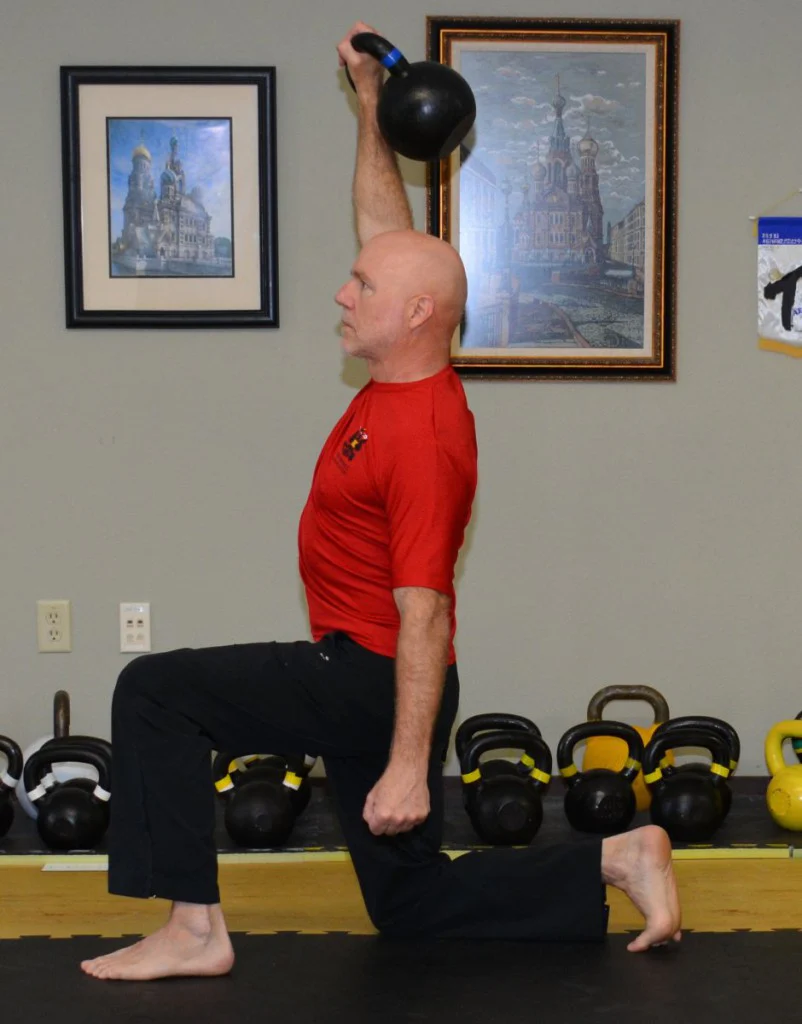
Dies ist ein perfektes Beispiel für eine Fähigkeit, die einen stabilen Kern erfordert, während der Körper in Bewegung ist. Das Gewicht über dem Kopf wird durch Kraft, die in den Boden gerichtet ist, unterstützt und angehoben. Diese Kraft muss durch Gliedmaßen gehen, die mit einem soliden und starken Kern verbunden sind. Die Fähigkeit, die Wirbelsäule während der Bewegung in der Länge zu halten, ist ein wesentliches Element für die meisten sportlichen Aktivitäten. Die Muskeln auf unserem Rücken bringen die Wirbelsäule in die Extension, während die Muskeln an der Vorderseite des Körpers uns in die Flexion bringen. Beide Muskelgruppen sowie die Muskeln an den Seiten unseres Rumpfes müssen eine ausgewogene Menge an Kontraktion haben, um die Wirbelsäule in dieser geraden, verlängerten Position zu stabilisieren. Du könntest dies als eine gute Körperhaltung und eine korrigierende Übung für die vielen Stunden betrachten, die du gebeugt über deinem iPhone sitzt und deinen Freunden schreibst.
Sitzposition
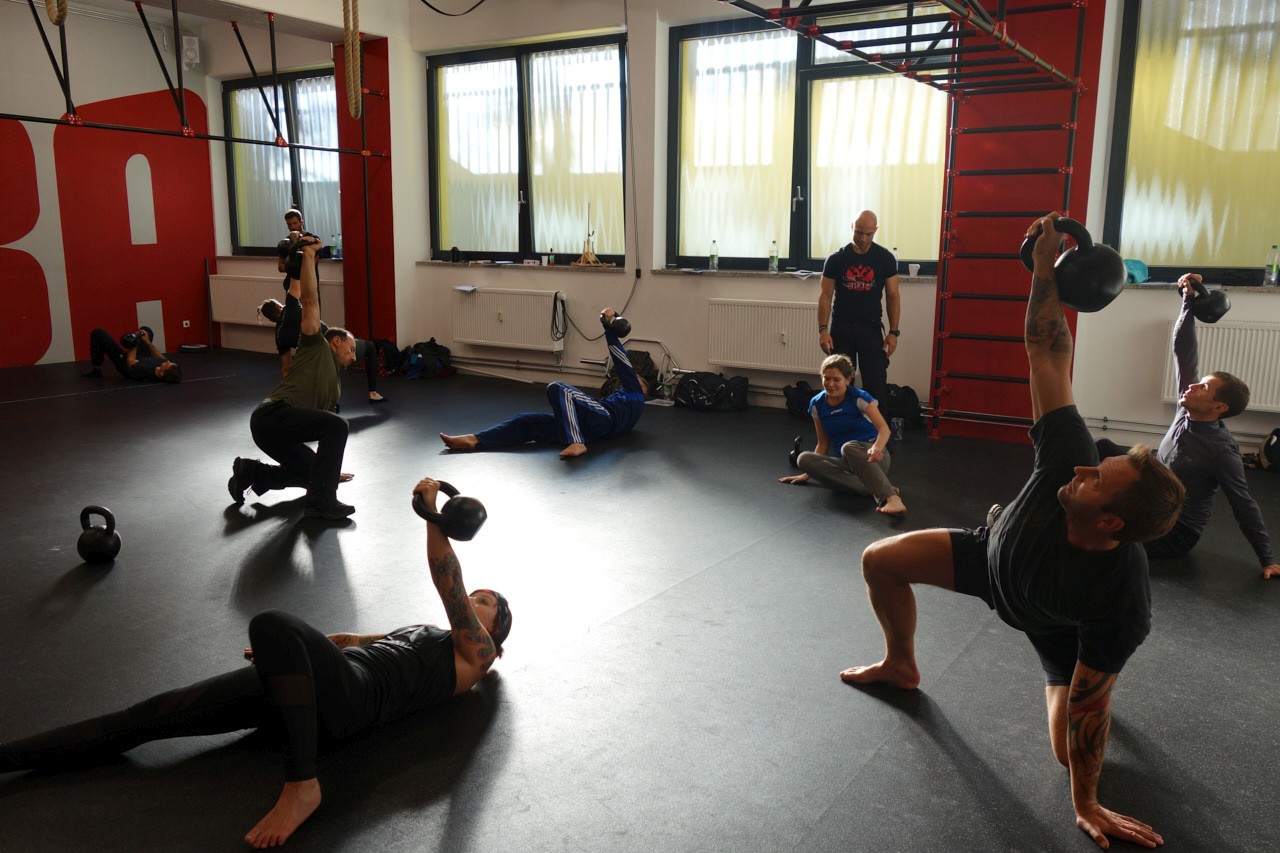
Die erste Bewegung des Türkischen Getups besteht darin, von einer supinen (oder liegenden) Position in eine Sitzposition zu wechseln. Wenn du dein Kinn einziehst und deine Wirbelsäule in die Flexion krümmst, während du diese Bewegung ausführst, wirst du feststellen, dass es deinen Arm nach vorne zieht, dein Bein anhebt und es sehr schwierig macht, in die Sitzposition zu gelangen. Spanne deine Bauchmuskeln an, während du gleichzeitig deine Brust öffnest und von deinem Kopf bis zu deinem Steißbein verlängerst. Dies erfordert „Kraft im Kern“ in Bewegung, während du von der liegenden Position in die Sitz- und nahezu vertikale Wirbelsäulenposition übergehst. Die nach unten gerichtete Kraft der Kettlebell muss durch den Arm, durch den „Kern“ und in den Boden gelangen.