After attending and passing an HKC or RKC Workshop, we’ve done countless swings, feel confident about the material, and want to present the ideas we’ve learned to our clients. If you are like me, you’ve invested a ton of time and effort into other training systems. And you know that it’s difficult to integrate all the moving parts into a single sensible flow of program design.
During a certification weekend, I make a point to lecture on how to coach. “How to coach” is a drastically different subject than “what to coach”. The RKC manual and the instruction protocols we follow to teach the exercises are very thorough. If you’re a smart coach and refer back to the manual, most cases are very simple. But, how to coach it all—that’s an entirely different conversation.
Is this article about coaching style? Yes and no. Is it about coaching procedures? Sort of… I define coaching as the entire approach when teaching the material, the techniques, and the expected intensities for a given set. For great coaches, this is effortless. But, new coaches will need to make a conscious effort to develop the coaching muscle memory before it can become automatic. After twenty years in the college strength and conditioning world, I can confidently tell you that I’m there—but it took time. In this post, I will outline much of what I teach about coaching.
What Modality Are You Teaching?
Kettlebells, Olympic lifts, TRX, and CrossFit all have certain inherent personalities—and your temperament should fit the training setting. For example, when coaching the Olympic lifts, there is a massive psychological component with an athlete who is attempting a personal best. In that moment, you might go from being a coach to a psychotherapist. You might help them manage fear and hesitancy instead of yelling and trying to fire them up.
It’s extremely important to clearly understand the nature of what you are coaching. A yoga instructor yelling for their students to perform various poses will probably not be a yoga instructor for very long. It’s a ridiculous but clear example.
The RKC is a high tension program, which also means it’s high effort. So, an instructor using a very calming yin tone will likely not help their trainee get the most out of a nasty kettlebell swing ladder.
Embody the spirit of what you are coaching.
Who Are You Coaching?
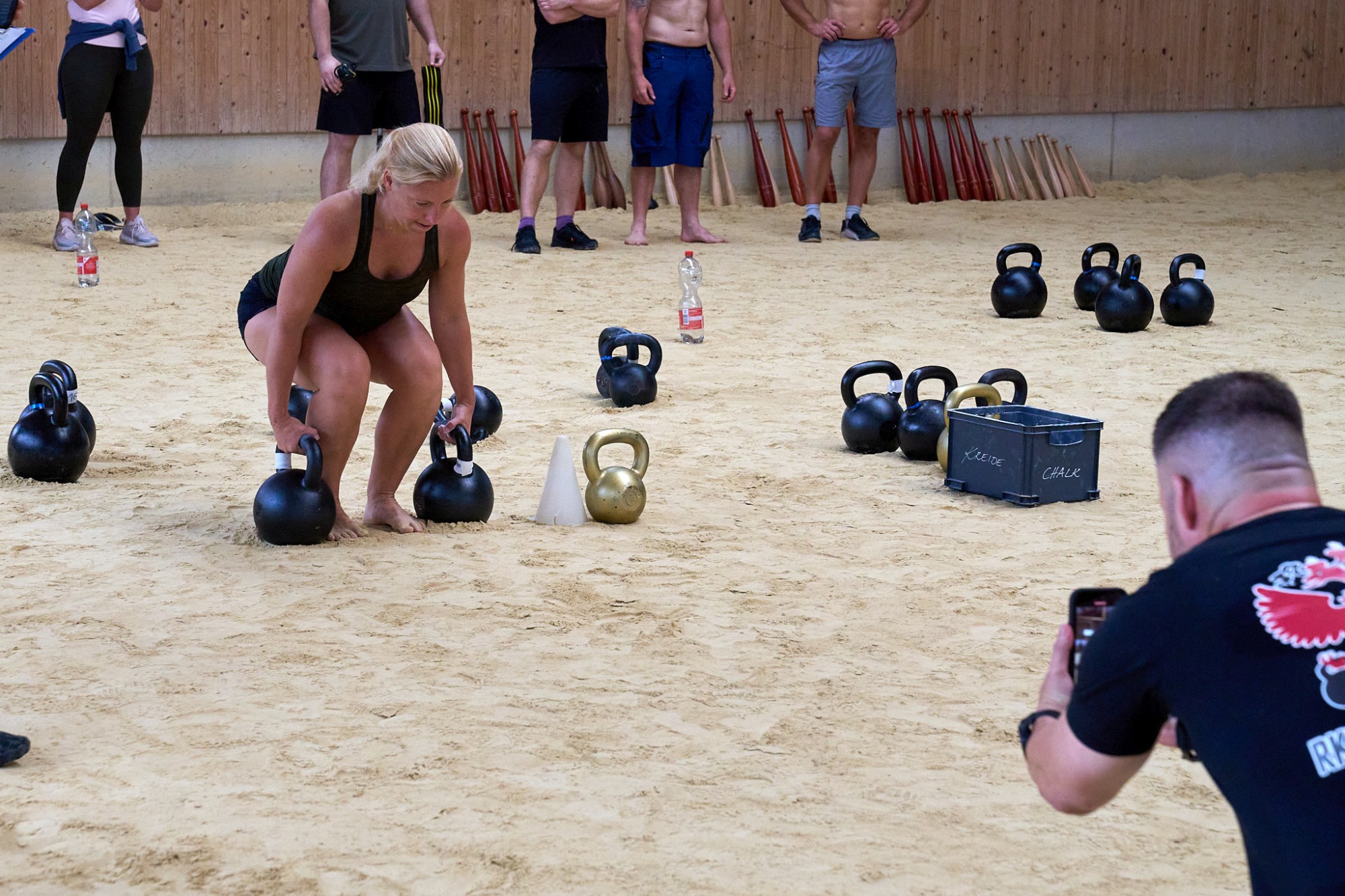
One of my favorite things about the CrossFit community is that the members know today will not be easy. The programming always includes a big push at some point. If I were a box owner, I would assume that most of my clients have some edge, and that I can take them to some of the outer realms of fatigue, burn and through certain pain thresholds.
Conversely, I will never forget my first paying personal training client. At the time I had been coaching college kids for about seven years when I got an email from a woman who had some back pain and wanted to hire me for kettlebell training. We exchanged emails, agreed on a price and planned our first meeting the coming Saturday.
Remember, I had been coaching bulletproof 18-22-year-olds for years—and a severely deconditioned, 70 year old woman who was about 50 pounds overweight walked in! She was carrying two 2lb kettlebells with plastic handles attached to nylon straps which formed what can only be described as oversized hacky sacks. She insisted on using them. While I wanted to ask her where the hell she found that nonsense, I knew that my tough-guy approach was not going to work. I suddenly had to learn how to work with a brand new demographic. Thankfully, I knew that an elderly woman would not respond to me screaming at her to pick up the weight!
Know Your Stuff
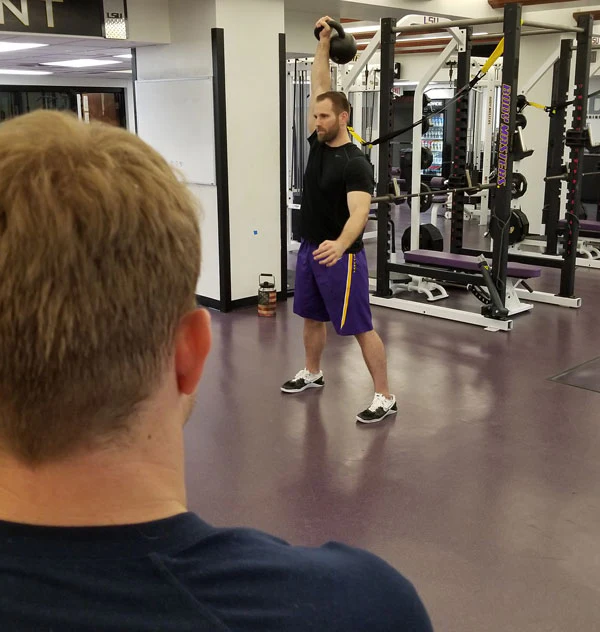
Know the information cold, in your sleep, without thinking. Make sure you refer to your RKC or HKC manual many times after your certification weekend. I’ve had the profound luxury of training between 300-500 athletes every day, Monday through Friday. At minimum I’ll led 1,500 individuals in their training (in groups of course) each week. Regardless of the season, my athletes do 100 swings a day. So, that’s 150,000 swings that I could potentially dissect and critique each week. Most personal trainers won’t see that many swings in a year.
My coaching uptake is fast simply because I’m truly immersed in it daily. I see a slew of funky swings, tons of just-right swings, and more horrible swings than any one person should ever have to see. Every day I quickly analyze and pump out corrections at a blistering pace. I’m not a genius, I simply have critiqued—and continue to critique—countless reps.
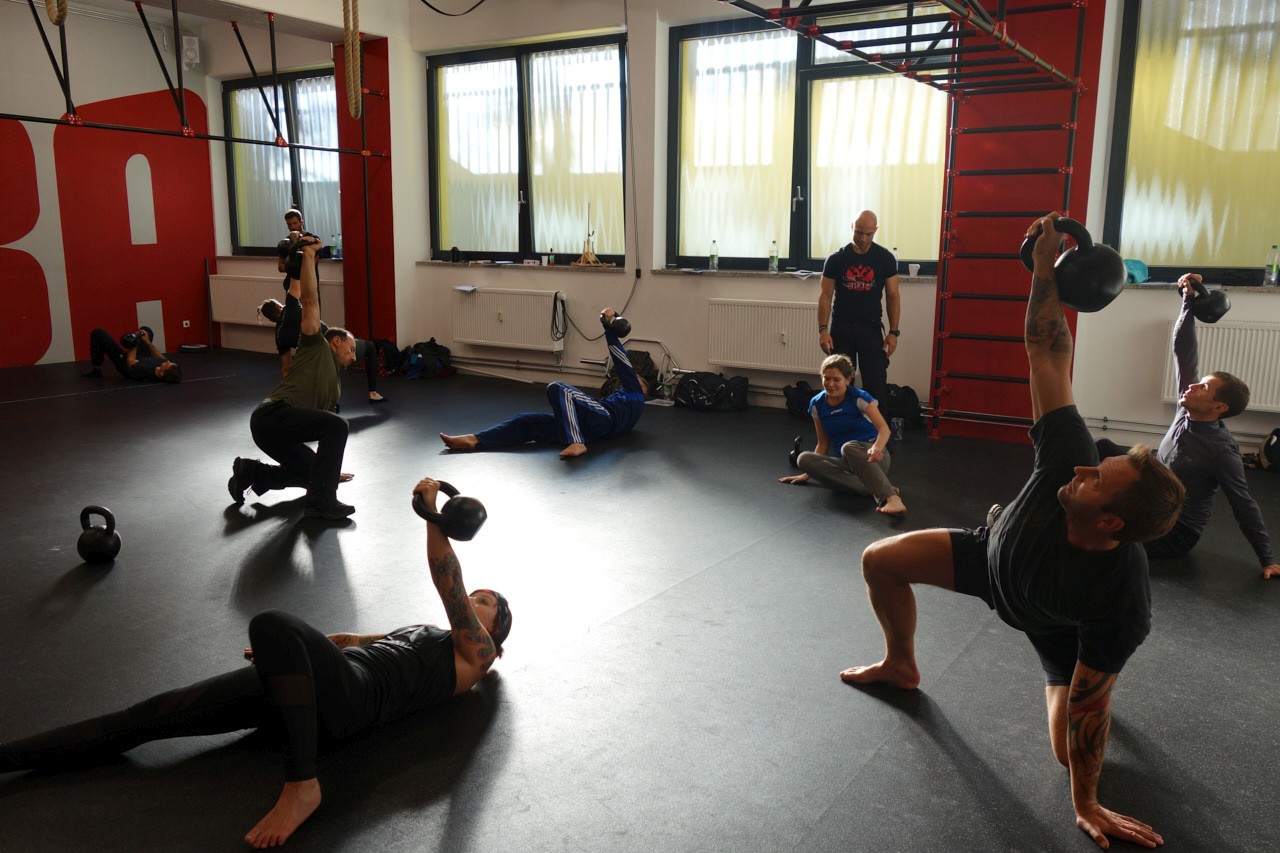
Watch everything, be an observer at all times. Watch other people’s clients so you can bank reps. Record your own reps with your phone and critique yourself. Be a student every waking moment of the day and deconstruct what you are seeing—pass everything through your RKC filter. Mentally pick apart what you see to sharpen your blade.
I can coach anyone, and it’s not because I’m special. It’s because I’ve been able to constantly analyze and coach for years without pause. It’s nothing you can learn from a book or at a certification weekend. You have to do the time, put in the reps, and see as many repetition attempts as possible.
What To Watch
A good coach has a very specific eye for watching reps. Each exercise has lists of technical requirements. But, all of our movements begin with the feet on the floor—even the get-up. As you watch your clients or athletes train, your eyes should first go to their feet. Many technical errors in the top half of the body can be remedied by correcting the feet—not the chest, shoulder, or even the back. Our feet connect the movement to leverage, support posture, and give the athlete a foundation. The feet are the gateway to all things good. So, your eyes should start at the feet and return there throughout the set.
Breathing is also a frequent cause of technical flaws. When do they inhale? When do they exhale? Are they exhaling completely, or are they sipping and leaking? Know the answers, have a game plan for their breathing, and then coach it. Breathing is more listening than watching.
We have very clear standards for all of our movements. You know them because you were responsible for learning and demonstrating them at your RKC or HKC workshop. We don’t just enforce the standards to complicate the RKC weekend, we enforce them because they almost guarantee safety and without question ensure top performance. You need to coach those standards and elements. While we all eventually develop some degree of stylistic variations of our own, before you teach them to your clients, they should already have a firm handle on the basics. Look for the basics as you watch, and correct accordingly.
Lastly, I want you to pay particular attention to the head and neck. The RKC and HKC curriculum is filled with huge, dynamic movements. We need to understand the potential range of motion of the individual spinal joints. Joints are meant to move—until they are not. Whenever the body is loaded, the spine should stay motionless, unless the exercise is specifically designed for the spine to twist, rotate, flex or extend. The spine doesn’t stop at the shoulders, and most trainers forget that the neck is still part of the spine. I have multiple stories that will give you the chills involving athletes simply turned their heads while under load and breaking their backs. So, without getting into too much gore, the head and neck need to stay relatively motionless any time while the athlete is under load. Correct this immediately.