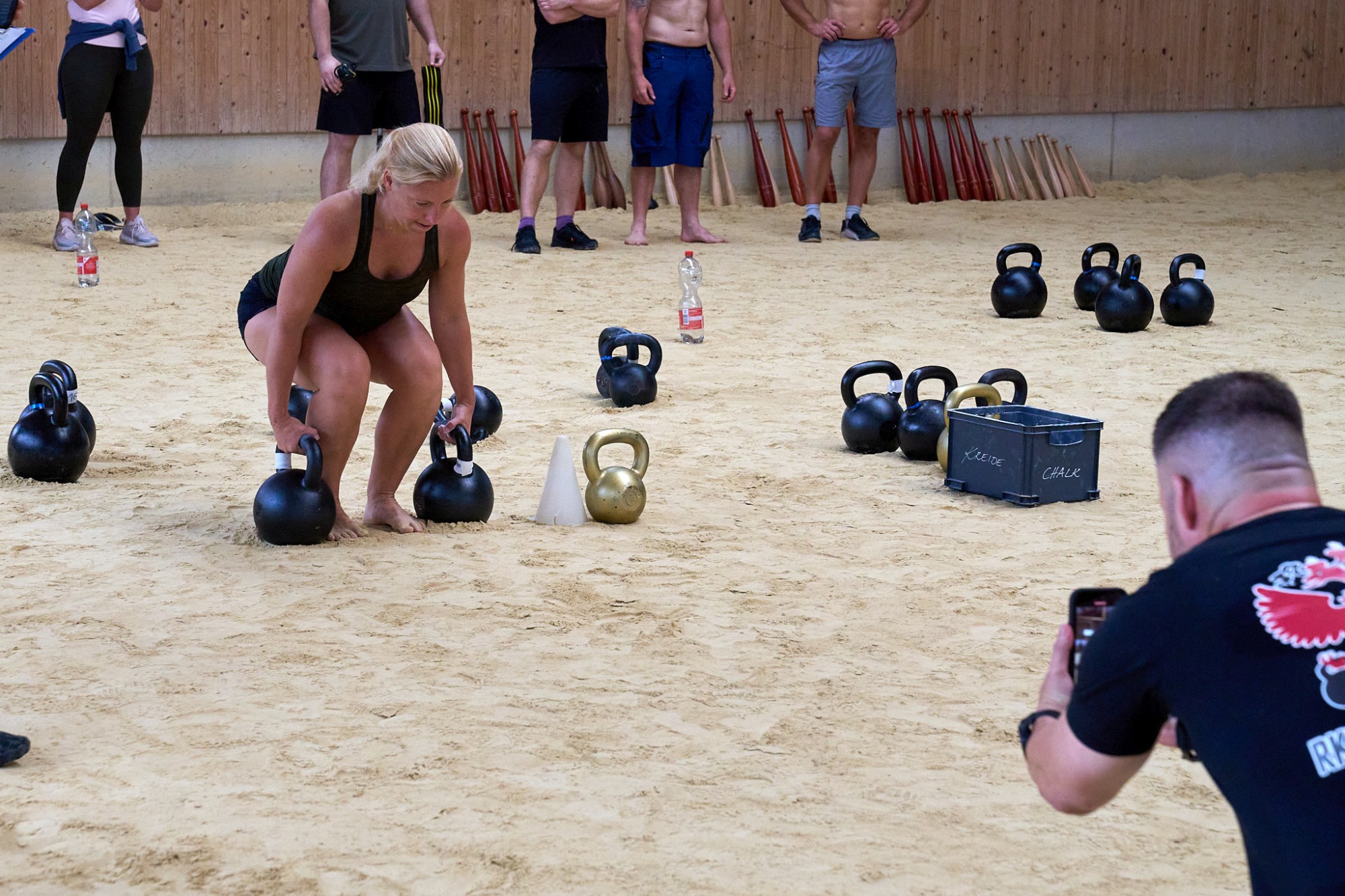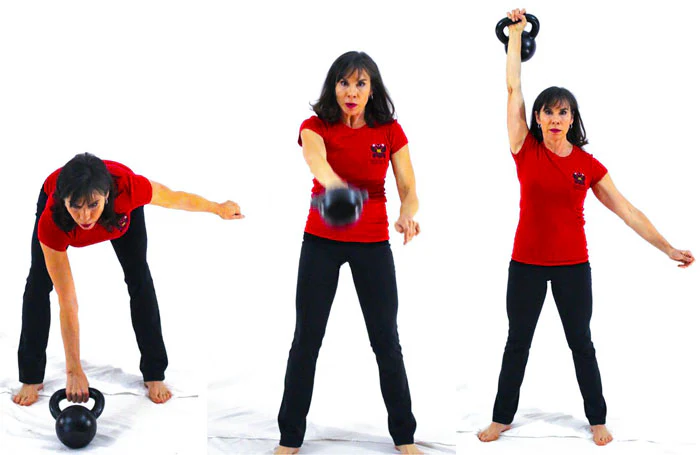
Was ist das erste, woran Sie denken, wenn Sie sich auf die RKC vorbereiten? Die meisten Menschen denken sofort an den gefürchteten SNATCH Test! Das ist verständlich – schließlich ist der RKC Snatch Test ein Test der Konditionierung eines Kandidaten und wie gut er trainiert hat, um 100 Snatches innerhalb von 5 Minuten mit der entsprechenden Kettlebell für seine Gewichtsklasse abzuschließen. Es soll eine Herausforderung sein. Jeder wird zustimmen, dass man seine RKC verdienen muss – sie wird nicht einfach an jeden vergeben, der an einem RKC-Workshop teilnimmt.
Es ist also keine Überraschung, dass die meisten Fragen und Informationen zur Vorbereitung auf einen RKC-Workshop darauf abzielen, wie man erfolgreich durch den Snatch Test kommt. Als Master Instructor, der Tausende von Snatch Tests gesehen hat und die Fähigkeiten von mehr RKCs getestet hat, als ich zählen kann, kann ich Ihnen sagen, dass die meisten Menschen in ihrer RKC-Vorbereitung auf das falsche Ziel fokussiert sind!
Ich erinnere die Kandidaten immer daran, dass der Snatch Test nicht dasselbe ist wie der Snatch Technique Test. Der Snatch Test prüft die mentale und physische Konditionierung des Kandidaten. Der Snatch Technique Test dreht sich ganz um Technik – jede Wiederholung sollte so perfekt wie möglich sein. Wir lassen eine faire Menge an schlampiger Form beim Snatch Test durchgehen, weil es nahezu unmöglich ist, 100 PERFEKTE Wiederholungen innerhalb von 5 Minuten zu machen. Aber wir erwarten 5 perfekte Wiederholungen auf jeder Seite während des Techniktests.
Wenn sich also jemand in seiner Vorbereitung ausschließlich darauf konzentriert hat, 100 Wiederholungen ohne jegliche Beachtung der Technik der Bewegung zu absolvieren, könnte er überrascht sein, wenn er die Snatch-, Swing- oder Clean-Techniktests nicht besteht. Das bringt mich zu dem Punkt dieses Artikels; Ihre Vorbereitung sollte ganz auf die Grundlagen ausgerichtet sein – wie den Swing!
Vor ihrem RKC-Workshop denken viele Kandidaten, dass ihr Swing ziemlich gut ist. Aber fast jeder lernt bald, dass sie "Lecks" in ihrer Swing-Technik hatten! Und wenn der zusätzliche Zug des Arms zum Überkopf-Lockout für den Snatch hinzukommt, verlieren viele Kandidaten ihre Hüften oder ihren Atem, da der Snatch mit schlechter Technik zu einem Rücken- und Schulterzug werden kann, anstatt eine hüftgetriebene Übung zu sein.
Mein Rat:
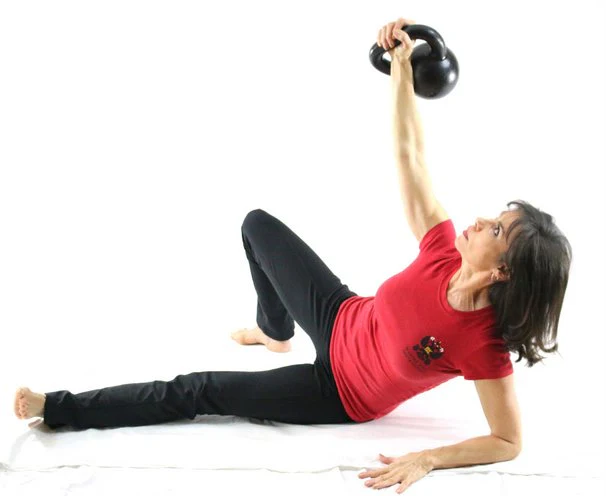
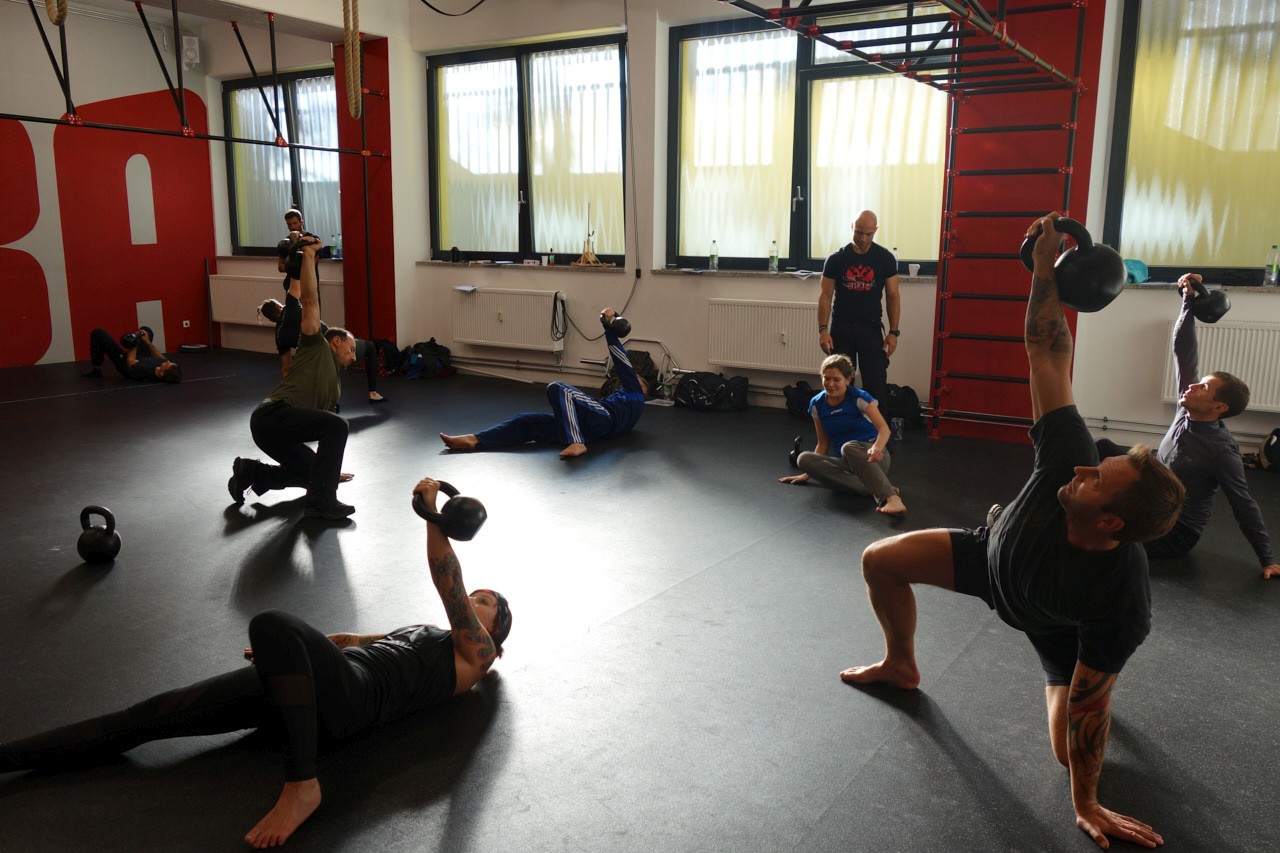
Üben Sie alle Fähigkeiten, arbeiten Sie an Ihrem Volumen und Ihrer Konditionierung mit schweren Swings und üben Sie Ihren Snatch und Clean mit Fokus auf perfekte Form. Entwickeln Sie Ihre Drück- und Kniebeugenkraft. Verbringen Sie viel Zeit mit dem Get-Up – beginnen Sie mit leichteren Kettlebells und erhöhen Sie dann die Last auf die Größe Ihrer Snatch-Test-Kettlebell. Last but not least, arbeiten Sie an Ihrer Mobilität und Flexibilität! Sie werden die RKC nicht bestehen, wenn Sie Ihre Bewegungsfähigkeiten vernachlässigt haben!
Der beste Weg, um sicherzustellen, dass Sie die Übungen korrekt trainieren und ausführen, ist die Teilnahme an einem HKC-Workshop als Teil Ihrer Vorbereitung – und/oder arbeiten Sie mit einem lokalen RKC-Instructor, um auf dem richtigen Weg zu bleiben.
Zu versuchen, YouTube als Ihren "Lehrer" zu nutzen, wird begrenzte bis negative Ergebnisse liefern. Jeder, der jemals versucht hat, jemandem das Heben und Schwingen beizubringen, weiß, dass dies eine sehr schwierige Bewegung für viele Menschen ist und es sehr einfach ist, zu schummeln – ohne es überhaupt zu wissen!
Im Folgenden werde ich eine sehr einfache Programmvorlage skizzieren. Es ist eine allgemeine Richtlinie, die Sie an Ihre individuellen Bedürfnisse anpassen müssen. Wenn Sie mit einem RKC arbeiten, wird er zweifellos ein spezifisches Programm mit Ihnen im Hinterkopf entwerfen.
Wie viel Zeit sollte ich mir für die Vorbereitung auf eine RKC geben?
Im Allgemeinen, wenn Sie nicht als HKC zertifiziert sind, empfehlen wir, sechs Monate bis ein Jahr für die Vorbereitung auf die RKC einzuplanen. Wenn Sie HKC-zertifiziert sind, rechnen Sie mit drei bis sechs Monaten.
Das mag viel Zeit erscheinen, aber denken Sie daran, um sicher zu trainieren und Ihre allgemeine Konditionierung aufzubauen, benötigen Sie viel Zeit, um hart zu pushen und zu ruhen. Bei jedem RKC-Workshop gibt es immer Menschen, die ihre Teilnahme aufgrund von Verletzungen während des Vorbereitungstrainings verschieben mussten.
Verbringen Sie 3-4 Tage pro Woche mit Swing- und Technikübungen. Wechseln Sie zwischen Tagen mit schweren Zwei-Hand-Swings und einarmigen Übungen mit einer Snatch-Größe oder einer Größe leichteren Kettlebell. Halten Sie zunächst das Volumen Ihrer Cleans und Snatches niedrig. Wenn sich Ihre Technik und Konditionierung verbessern, erhöhen Sie Ihre Wiederholungen. Das Get-Up kann als Aufwärmen, aktive Erholung und als Übung zum Üben mit Last verwendet werden.