Bodenoberfläche:
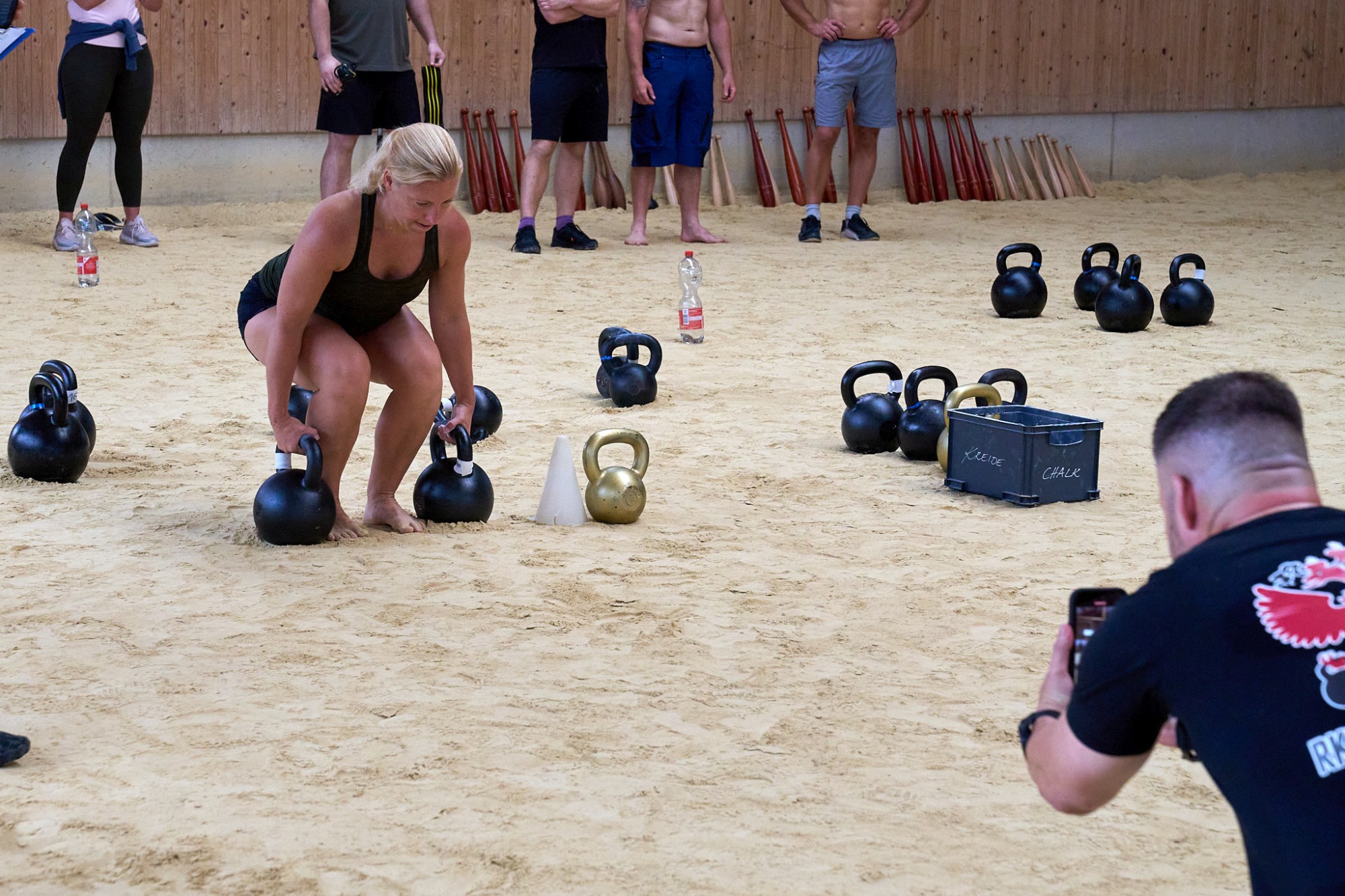
Vielleicht hast du nicht viele Bodenoptionen in deinem Zuhause, aber hier sind einige Ideen, die du im Hinterkopf behalten solltest. Im Allgemeinen kannst du jede Übung, die du im Stehen machst, auf einer harten Oberfläche wie Holz, Stein oder Fliesen durchführen. Eine harte Oberfläche zum Stehen gibt deinem Gehirn Feedback von deinen Füßen und dem Boden. Du hast auch eine stabile Plattform, um maximale Spannung und Kraft zu erzeugen.
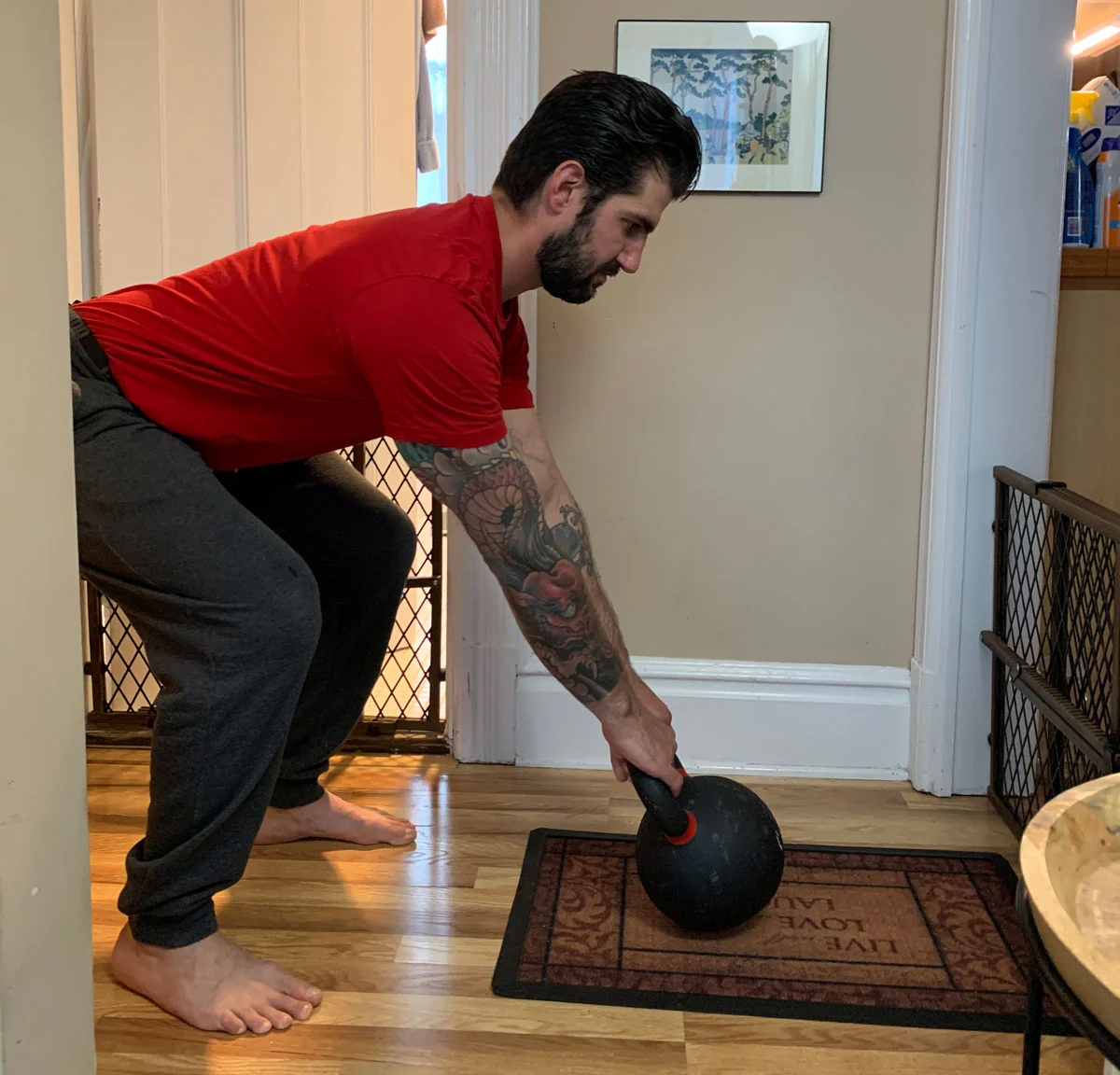
Denke daran, dass du in deinem Zuhause bist. Versuche nicht, deine Kettlebell aggressiv über diese Oberflächen zu ziehen oder fallen zu lassen, da du sie beschädigen könntest. Ich empfehle, auf der harten Oberfläche zu stehen und einen Teppich, eine Yogamatte oder ein Handtuch auf den Boden vor dir zu legen; dies kann als Start- und Parkfläche für deine Kettlebell dienen.
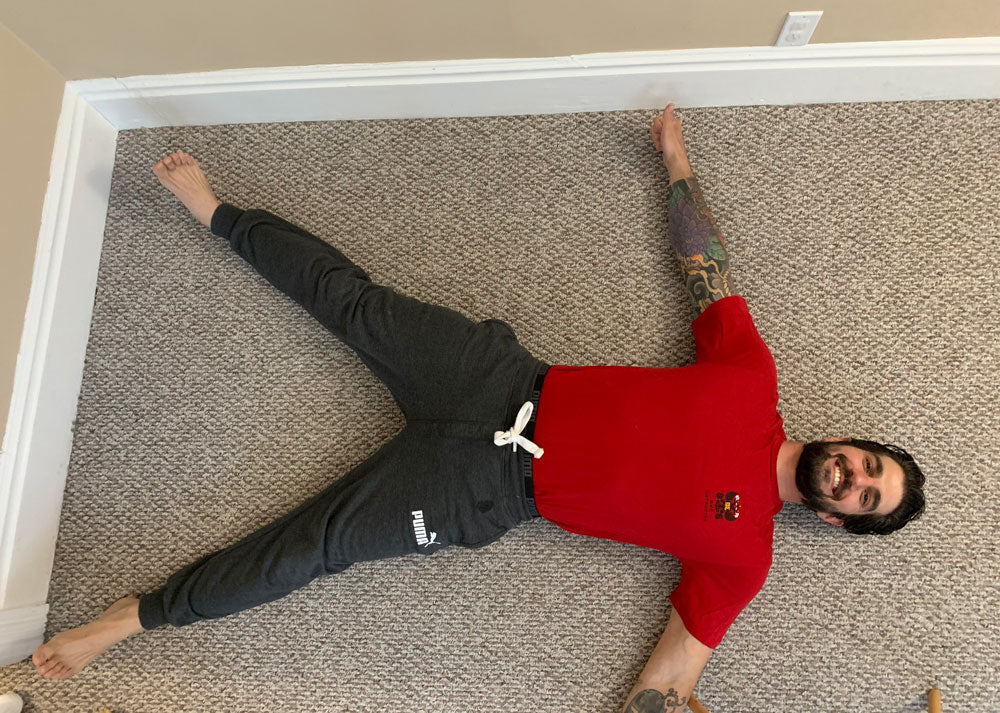
Wenn du einen Raum hast, der einen harten Teppich hat, funktioniert das auch. Mein Wohnzimmer (wo ich meine Home-Workouts mache) hat einen fest gepackten Teppich.
Es ist eine gute Idee, sehr dicke und weiche Teppiche zu vermeiden. Diese Oberflächen erschweren es, die Stabilität zu finden, die du für ein sicheres Workout benötigst, und das Feedback vom Boden zu deinen Füßen und deinem Gehirn geht ein wenig verloren.
Schweiß:
Sei dir bewusst, dass beim Training auf Holz, Linoleum oder einem glänzenden Boden dein Schweiß den Boden rutschig macht. Halte ein Handtuch bereit, um zwischen den Sätzen aufzuwischen. Im Gegensatz dazu wird das Training auf einem Teppich nicht rutschig, aber es ist schwieriger zu reinigen, daher ist es eine gute Option, dich oft abzuwischen und Get-Ups auf ein paar Matten zu machen.
Schütteln, Rütteln & Ups:
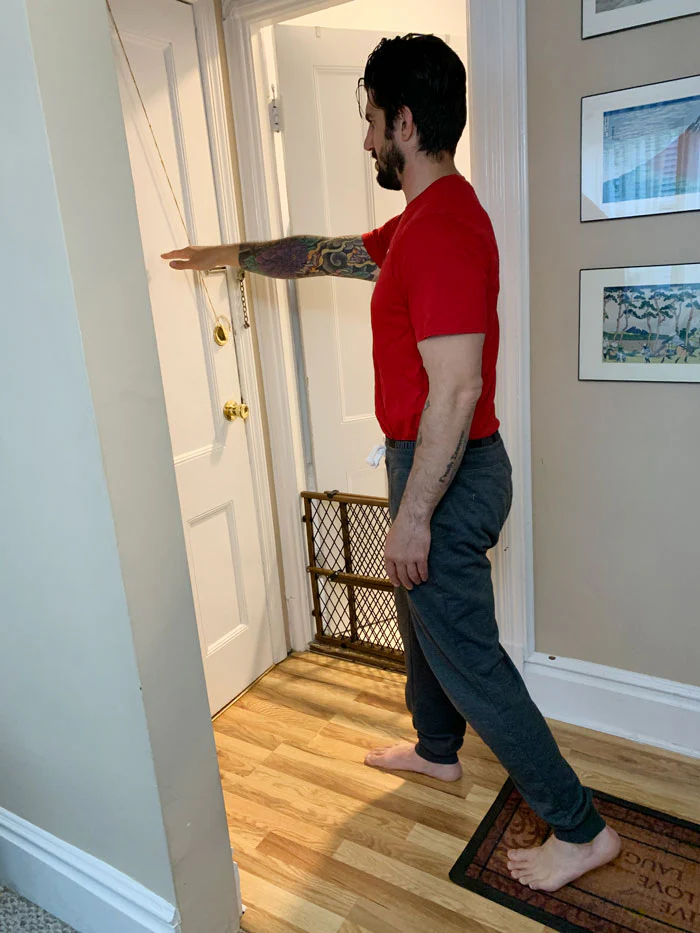
Wenn wir ballistische Bewegungen wie Swings, Cleans und Snatches ausführen, erzeugen wir viel Kraft direkt in den Boden. In einer Struktur wie einem Haus oder einer Wohnung wandert die Kraft durch den Boden und lässt Gegenstände in deinem Raum oder sogar in benachbarten Räumen wackeln. Ich empfehle, ein paar Wiederholungen zu machen und genau auf alles zu hören, was wackelt. Wenn du etwas wackeln hörst, bewege oder sichere diesen Gegenstand. Bei zwei Gelegenheiten in zwei verschiedenen Wohnungen habe ich Bilderrahmen von der Wand gewackelt und eines von den kleinen Schmuckstücken meiner Frau von einem Regal.
Gewicht & Übungsauswahl:
Beim Training zu Hause ist es besonders wichtig, das richtige Gewicht für dich, die Übung und deine Umgebung auszuwählen. Ich empfehle, ein Gewicht zu verwenden, das du wirklich BEHERRSCHST – oder möglicherweise nur leicht schwerer – während einer Übung, damit du die Kontrolle nicht verlierst oder aus einer Bewegung aussteigen musst.
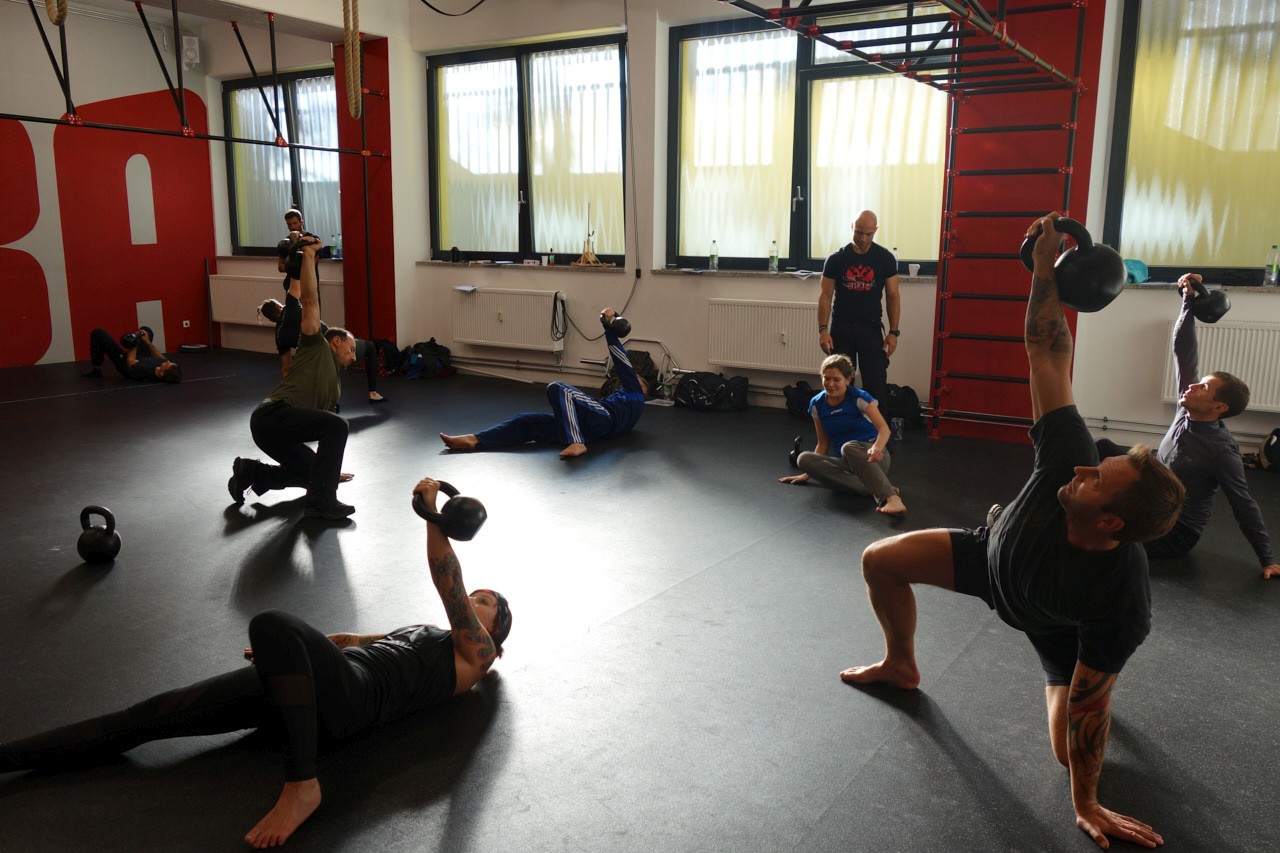
Das Get-Up ist ein ausgezeichnetes Beispiel dafür, warum eine sorgfältige Gewichtsauswahl für sichere Home-Workouts entscheidend ist. Ein Get-Up mit einer Kettlebell zu machen, die ein persönlicher Rekord (PR) sein wird oder mit der du extreme Schwierigkeiten hattest, könnte zu Hause keine gute Idee sein. Erstens wirst du höchstwahrscheinlich keinen Spotter haben, und zweitens, wenn du sicher aussteigst, wirst du wahrscheinlich den Boden und alles andere im Umkreis, das die Kettlebell trifft, beschädigen. Aua.
Ähnliche Regeln gelten für deine Übungsauswahl. Ein V02-Max-Stil Kettlebell-Snatch-Workout in deinem Flur zu machen, ist keine gute Idee. Denk an den unsicheren rutschigen Schweiß, den ich vorher erwähnt habe? Du wirst wahrscheinlich nicht genug Zeit haben, um wieder zu Atem zu kommen, geschweige denn den Schweiß auf dem Boden oder dich selbst verantwortungsvoll aufzuwischen. Wenn du die Kettlebell aufgrund deiner maximalen Leistung verlierst, wohin wird sie dann gehen?
Jetzt missverstehe mich nicht, ich möchte, dass du hart arbeitest und Swings, Snatches und Get-Ups machst. Ich sage dir nur, dass du klug bei deiner Gewicht- und Übungsauswahl sein sollst. Wenn du draußen in deinem Garten trainieren kannst, dann leg los! Aber wenn du in deinem Flur oder Wohnzimmer bist, drossle es ein wenig.
Das Training zu Hause ist eine ausgezeichnete Alternative zum Fitnessstudio. Es mag scheinen, als hättest du nicht genug Platz oder Equipment, aber alles, was du brauchst, ist ein wenig Anleitung (die hoffentlich dieser Artikel gegeben hat) und eine Kettlebell.
Sei sicher, achte auf deine Umgebung und arbeite hart.