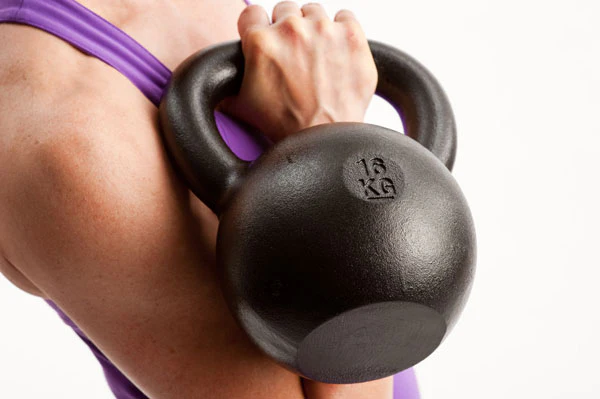
Während wir über Kettlebell-Griffe sprechen, möchte ich auf die verschiedenen Druckarten eingehen, die wir verwenden:
Crush Grip: Wird für schwere Drückübungen und gebogene Drückübungen verwendet.
Soft Grip: Wird für Aufstehen, Überkopftragen, Windmühlen verwendet. Die Finger sind um den Griff geschlossen und es gibt einen leichten Druck. Dies hilft mit der Schulterstabilität und hält die Kontrolle über die Kettlebell am Unterarm.
Closed Grip: Wird für Snatches und Jerks verwendet. Die Finger sind um den Griff geschlossen, ohne Druck, um die Schulterstabilität zu fördern. Es kann auch bei der Timing helfen. Wenn die Zeit ein Faktor ist, wie beim Snatch-Test, spart das Halten der Finger am Kettlebell-Griff Zeit.
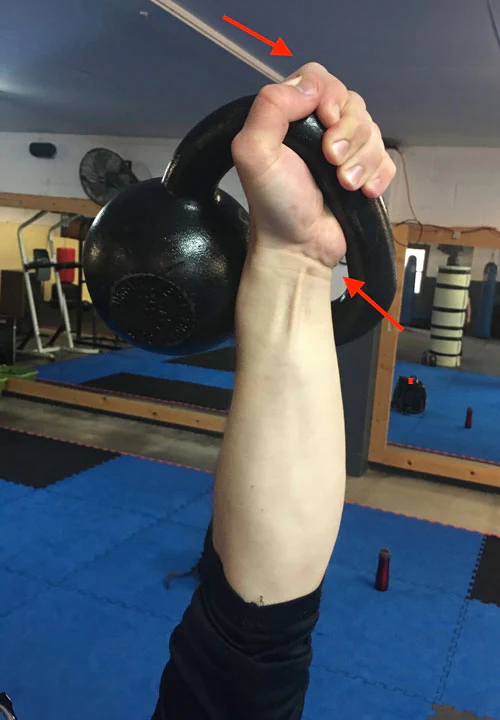
Open Grip: Dies ist wahrscheinlich der am häufigsten missbrauchte und missverstandene Griff. Es gibt bestimmte Gruppen von Kettlebell-Hebern, die davon profitieren, die Finger an der Spitze des Snatch zu öffnen. Wenn sich die Finger an der Spitze eines Snatch öffnen, ermöglicht dies der Hand und dem Griff, sich beim Verriegeln zu entspannen. Dies ist besonders gut für Menschen mit engen Schultern, die mehr Mobilität beim Verriegeln benötigen und für hohe Volumina von Snatches, bei denen der Griff ermüdet. Und es kann helfen, während man lernt, zu snatchen, für diejenigen, die Schwierigkeiten haben, den Griff während des Snatch übermäßig festzuhalten.
Das Öffnen der Hand an der Spitze einer Snatch-Wiederholung kann auch helfen, die Leute zu verlangsamen, wenn sie durch das Verriegeln hetzen. Wenn jemand jedoch während eines Snatch-Tests die Zeit davonläuft, sollte er darauf achten, die Hände geschlossen zu halten, da dies für jede Wiederholung eine Sekunde mehr zurückgibt.
Als Anmerkung: Diejenigen, die dazu neigen, den Kettlebell-Griff übermäßig festzuhalten, nutzen oft nicht ihre Hüften und Gesäßmuskeln, um die Bewegung zu treiben, sondern ziehen stattdessen mit ihren Armen und dem Rücken. Also zuerst die Hüften korrigieren, und das könnte die Notwendigkeit verringern, die Hand an der Spitze des Snatch zu öffnen. Im Allgemeinen Probleme von unten nach oben beheben!
Zweitens sollte der offene Griff nur während hoher Volumina von Snatches verwendet werden, niemals für Grinds wie Drücken oder Aufstehen, Windmühlen oder Tragen.
Beim schweren Drücken und/oder für Wiederholungen sollte die Hand immer geschlossen bleiben und mit mindestens leichtem Druck auf dem Griff. Wenn du die Hand an der Spitze eines Drucks öffnest, signalisiert das dem Nervensystem, sich zu entspannen – was wir während schwerer Drückübungen NICHT wollen!
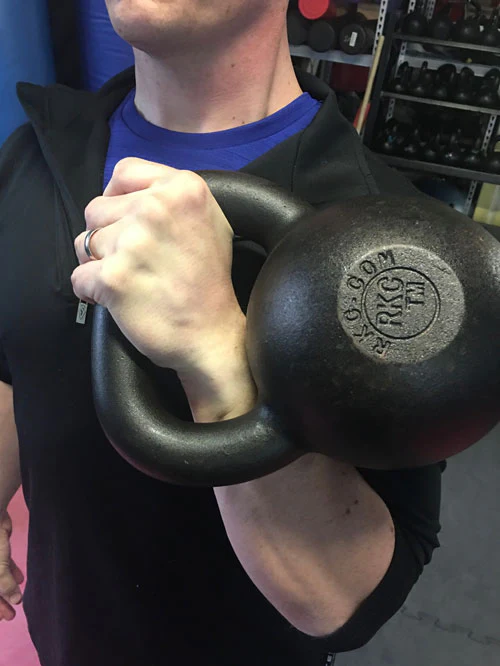
Der Diagonalgriff (oder Eckgriff):
Der Diagonalgriff wird nur für Cleans oder die Kombination aus Clean und Squats verwendet. Da kein Überkopfhalten, kein Drücken oder keine Stabilität erforderlich ist, ist der Eckgriff in Ordnung – und in einigen Fällen bevorzugt.
Der Eckgriff wird auch für Clean & Jerks empfohlen, da die Trizeps und Latissimus die meiste Arbeit über Kopf leisten, um das Verriegeln abzuschließen. Bei Jerks und Push Presses initiiert der Unterkörper die Bewegung und treibt die Kettlebell über Kopf. Du möchtest tatsächlich, dass die Arme entspannt sind – denn es ist KEIN Drücken.