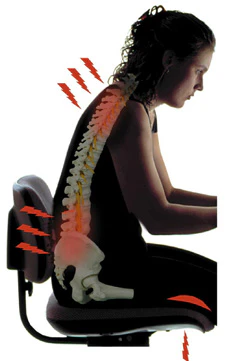
If the goal of exercise is improvement, then the effects of excessive sitting must be counteracted.
The main effects are as follows:
- Loss of hip extension
- Loss of ability to disassociate hips from each other, and trunk
- Loss of thoracic extension
- Stiffness in cervicothoracic junction (where neck meets back)
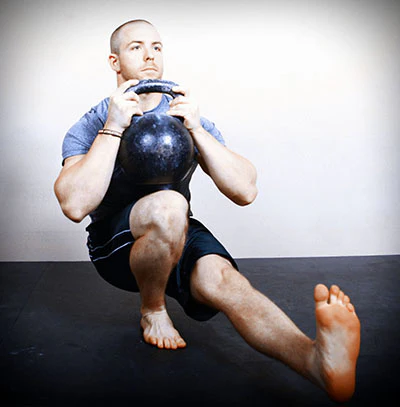
Even in a well executed pistol, the posture of the thoracic spine is nearly always caved forward (forcing the neck to make a sharp turn in relation to the spine), and both hips are in flexion–not off to a fantastic start. These issues aside, the pistol is still a terrific measure of relative flexibility, which is why it is included along with appropriate flexibility drills and progressions in RKC Level 2. Being able to do a pistol should be the goal, not necessarily making them a cornerstone of your training.
A better solution exists, and that is the airborne lunge. It’s the single leg exercise that everyone forgets about, and it has secret benefits that the pistol does not have.
As you can see in the video above, in the bottom position, one hip is in flexion while the other is in extension (just like sprinting, walking, etc). The posture is significantly improved and there is no spinal sharp turns. You will also get a little more overall hip mobility and glute activation when doing airborne lunges. Lastly, the airborne lunge is also much easier to load up to a heavy weight. My two favorites are with double kettlebells in the rack and a barbell held in the zercher position if you want to go exceptionally heavy.
Get stronger, run faster, all while increasing flexibility and movement quality–the airborne lunge is a win-win.