So viele Kettlebell-Übungen gehen über Kopf.
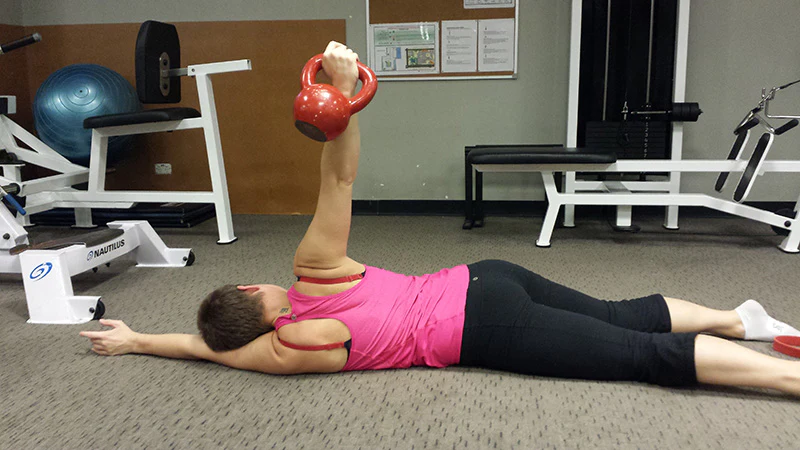
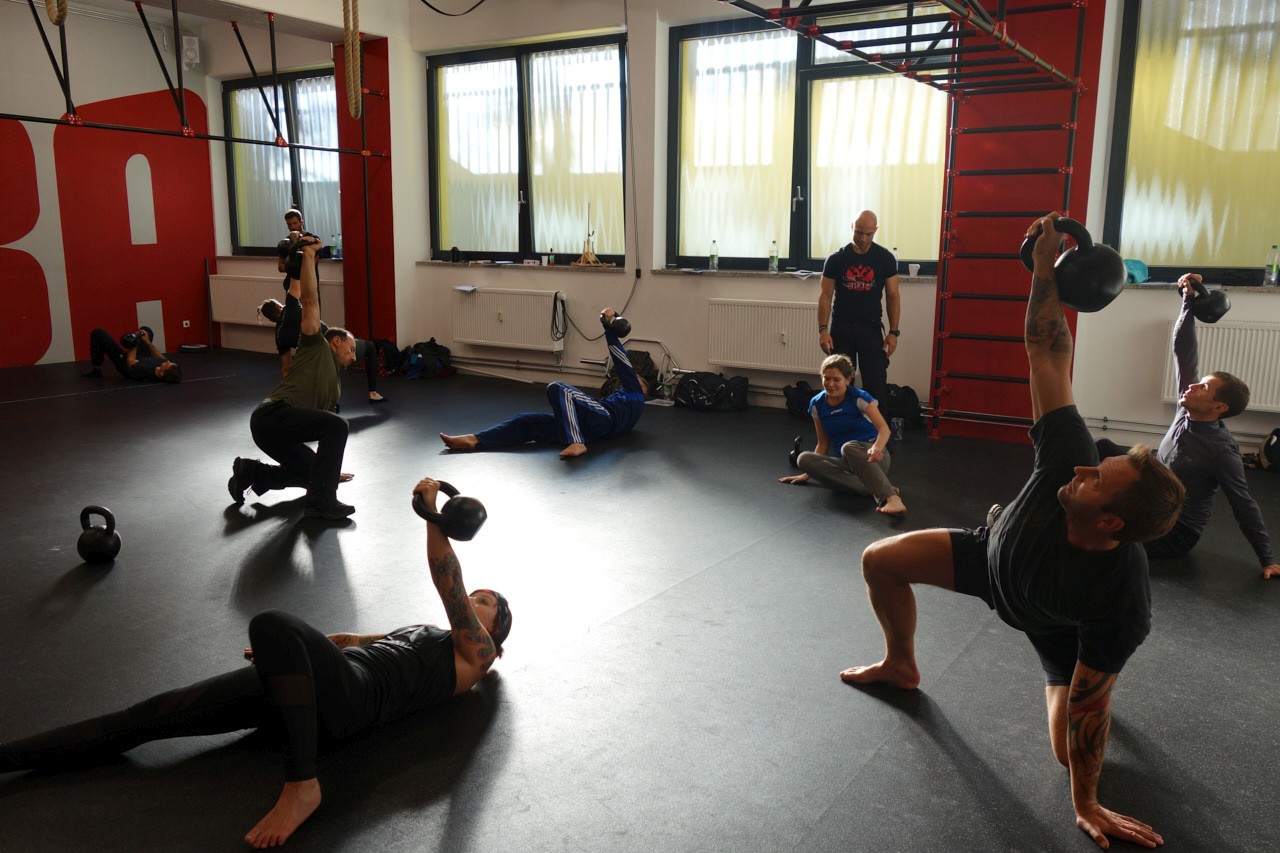
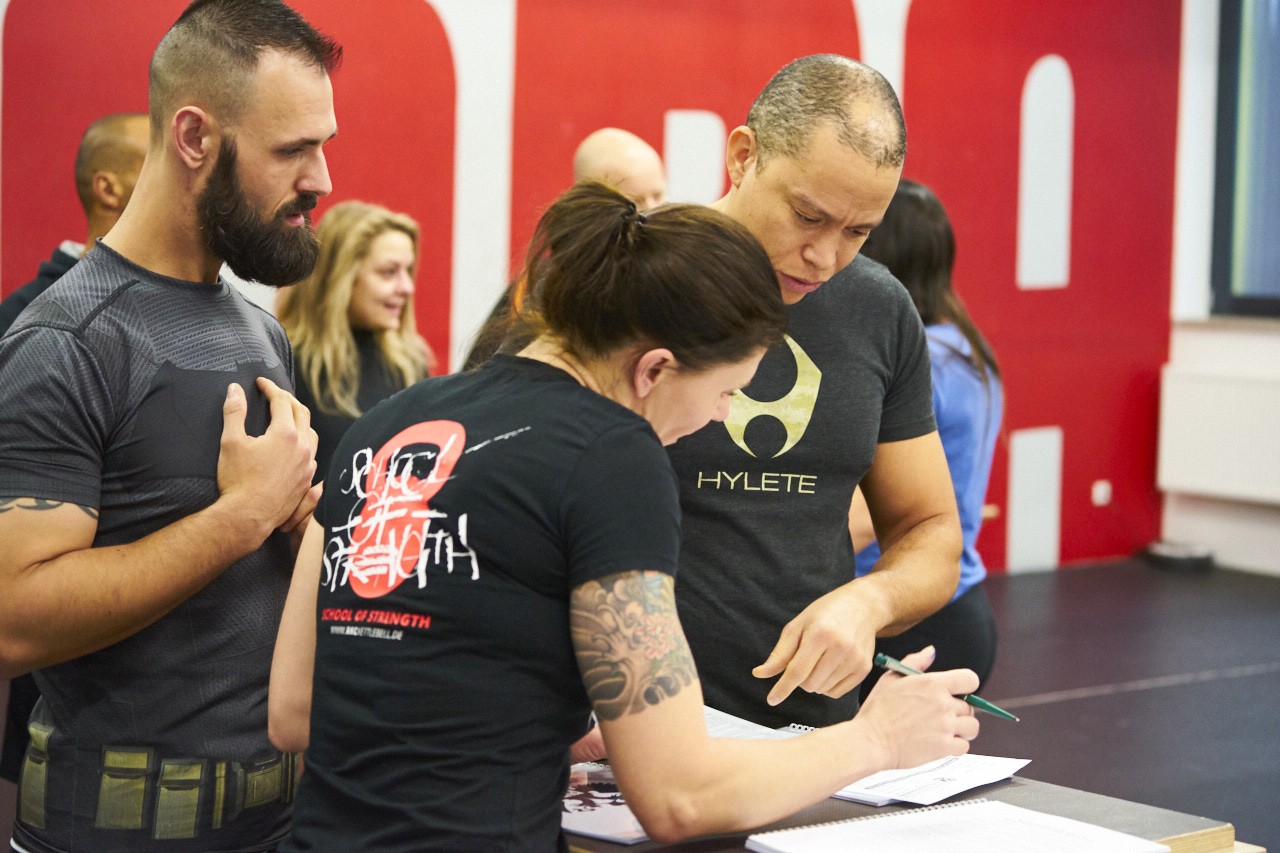
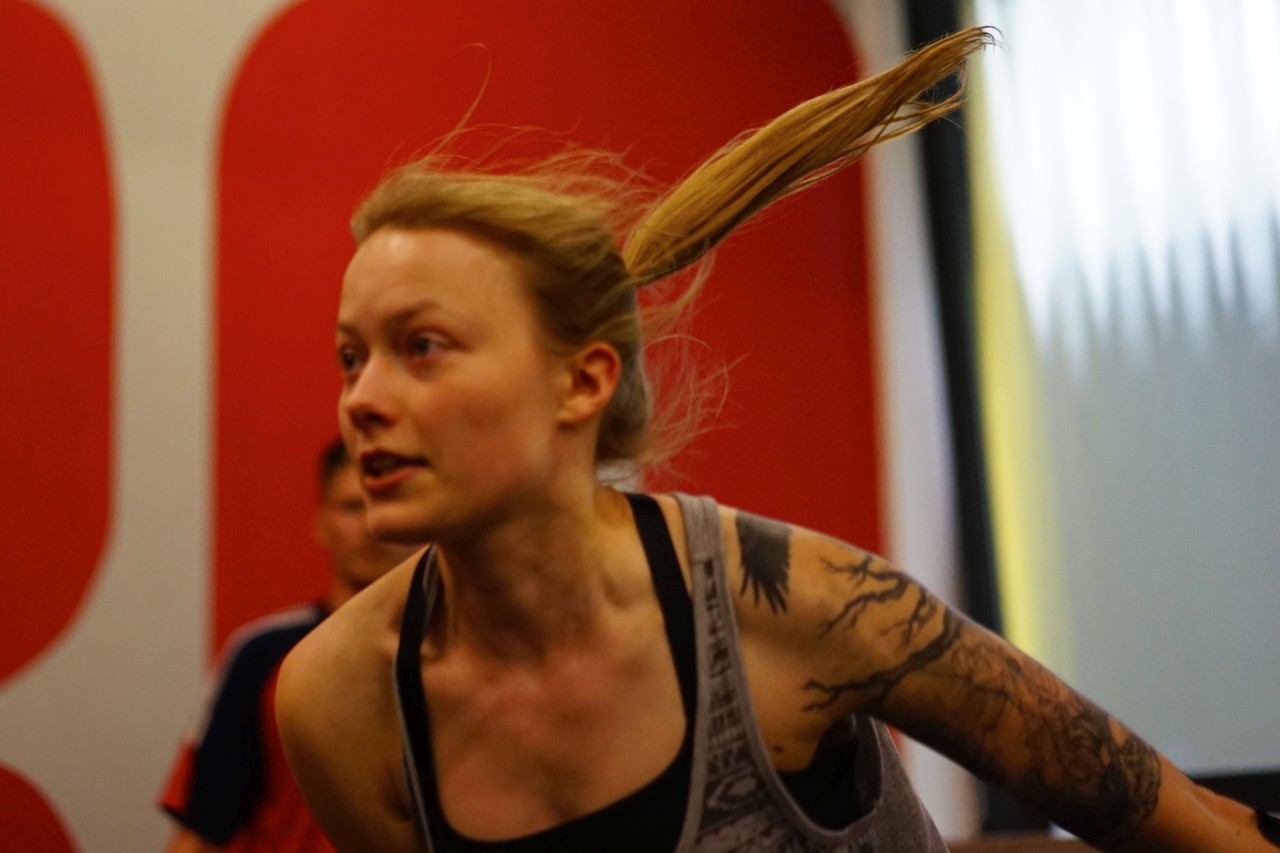
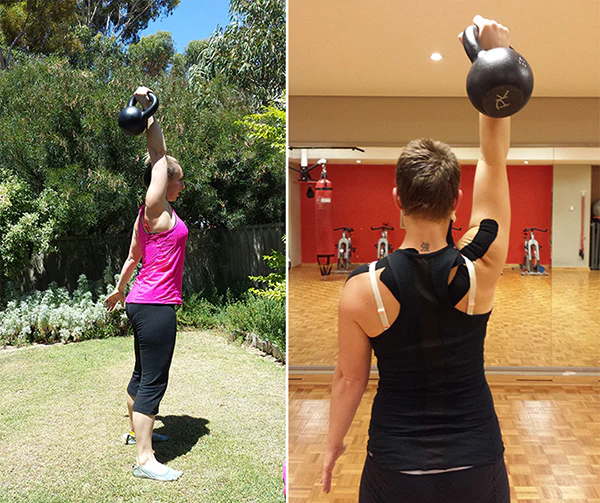
Einige bewegen sich schnell wie der Snatch (oberes linkes Bild) und der Jerk. Einige bewegen sich langsam wie der Press (oberes rechtes Bild) und der Bent Press. Und einige werden einfach nur über Kopf gehalten wie der Turkish Get Up und der Windmill, aber jede einzelne von ihnen sollte in der Lockout-Position identisch aussehen.
Wenn die Kettlebell über Kopf ist, sollte durch deinen Körper von oben nach unten Spannung fließen; den höchsten Punkt deiner Bewegung zu erreichen ist kein Moment zum Entspannen. Halte deine Lats aktiviert, deinen Bauch und deine Gesäßmuskeln fest, den Arm in die Schulter gezogen und das Handgelenk gerade, um Sicherheit und Kraft zu gewährleisten.
Aufschlüsselung des Überkopf-Lockouts:
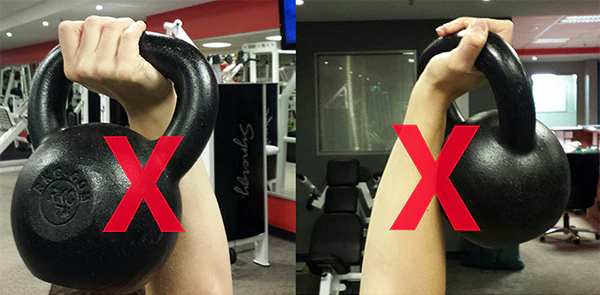
Das Handgelenk: Wenn das Handgelenk in der richtigen Position ist, bleibt der Muskel in deinem Unterarm aktiv. Ein gerades Handgelenk mit nach oben zeigenden Knöcheln aufrechtzuerhalten, kann für einige eine Herausforderung sein, insbesondere beim Einsatz einer leichteren Kettlebell, die höher am Handgelenk sitzt und auf den Knochen drückt. Wenn der Druck auf das Handgelenk zu groß ist, wenn du anfängst, nimm dir ein paar Schweißbänder und schütze das Handgelenk (nicht zur ständigen Verwendung, um eine Kettlebell abzufedern, die auf dein Handgelenk schlägt, das ist ein ganz anderes Problem).
Das Handgelenk gerade zu halten, ist entscheidend, um Verletzungen zu reduzieren; die „gebrochene Handgelenk“-Position wird letztendlich genau dazu führen…
Ich habe meinen Kollegen RKC und Physiotherapeuten Craig Soley um eine Aufschlüsselung der Gefahren einer falschen Handgelenksposition gebeten; folgendes ist seine Antwort –
„Einer der häufigsten Fehler bei KB-Press-Aktivitäten ist die Handgelenksposition. Um klarzustellen, wird die Handgelenkserweiterung (neutral) so beschrieben, dass, wenn ich eine Linie von deinen Knöcheln entlang der Rückseite deiner Hand und hinunter zu deinem Handgelenk ziehe, es eine perfekt gerade Linie wäre. Wenn das Handgelenk gebeugt ist (ein weniger häufiger Fehler), wären die Knöchel vor dem Handgelenk und Unterarm. Wenn das Handgelenk gestreckt ist, wären die Knöchel hinter den Knochen des Handgelenks und Unterarms. Wenn du die KB im neutralen Handgelenk hältst, wird die Last durch das Gelenk getragen und durch muskuläre Anstrengung gehalten – das ist gut. In der Handgelenkserweiterung wird die Last auf dem Gelenk getragen, weniger Muskelanstrengung und das Gewicht ruht auf den knöchernen Strukturen – über die Zeit ist das schlecht und es ist eine schlechte Praxis.
Warum? Denk an kollabierte Bögen und flache Füße, hyperextensible Knie und hyperlordotische Lendenwirbelsäulen als weitere Beispiele für das Ruhen auf deinen Gelenken. Wenn du ständig auf deinen Gelenken ruhst, werden sie letztendlich verschleißen. Außerdem, wenn du trainierst, trainiere! Nutze deine Muskeln, um die Arbeit zu erledigen und die Last von deinen Gelenken zu nehmen! Das Halten deines Handgelenks in neutraler Position trainiert für Funktion und Langlebigkeit.“