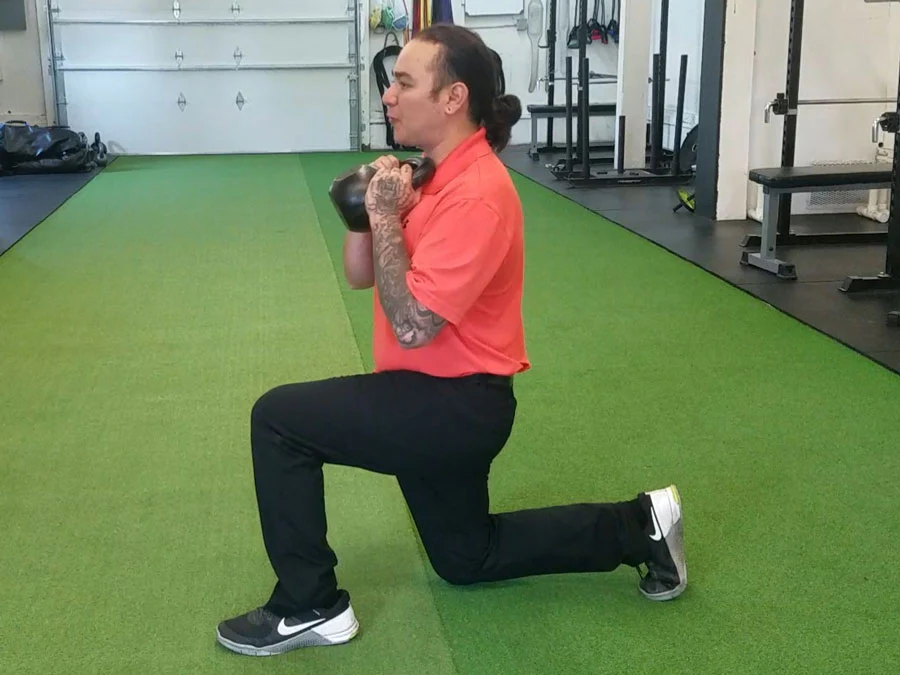
We spend a lot of time training our clients with bilateral movements, such as squatting and hinging. These dynamic and explosive movements are done in a stationary position. When we choose exercises for our clients—or for our own training—the exercises should always be purposeful movements applicable to their lifestyle and goals. Whether you coach athletes or the general population, everyone moves unilaterally.
Whenever moving in any plane of motion, we move by stepping with one foot first. We move unilaterally throughout our whole day. Unless we’re stationary for a while, we do not spend much time in a bilateral stance. Knowing that all movement is initiated with one foot, why do we place such an emphasis on bilateral movements when training our clients?
There are many reasons to include unilateral exercises in our training programs. But, one of the main reasons I include single leg training is to allow me to train my clients’ weaknesses. While it is easy to temporarily correct a client out of a knee valgus during a squat with the cue “spread the knees apart,” it doesn’t really fix the problem. By including single leg exercises you can help strengthen your client’s asymmetrical weaknesses—which will also strengthen their bilateral movements.
Another reason I favor unilateral movements, is because they can help rehab and prevent injuries. If you train athletes or the general population, your job is to help them reach their goals—and keep them safe during their training. Another great benefit unilateral exercises offer over bilateral exercises is that they promote even more ankle stability and strength. Strengthening the ankles can reduce the chance of ankle injuries—which often lead to knee and hip pain.
The following are a few of my favorite single leg exercises:
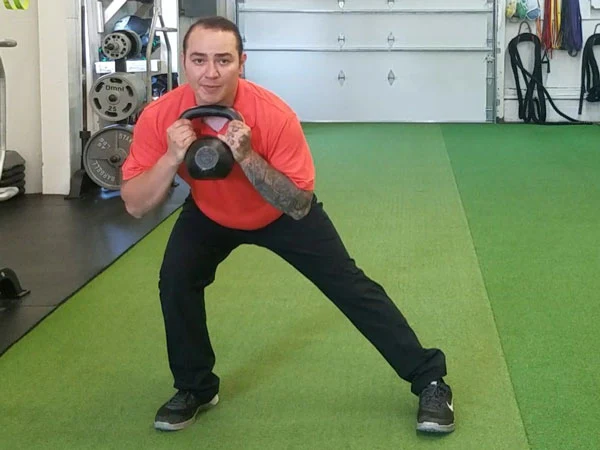
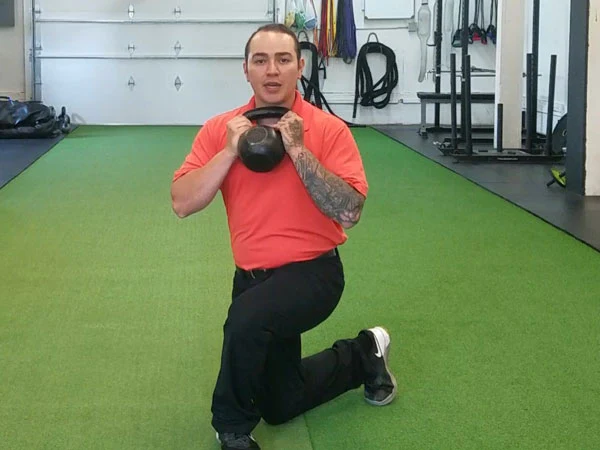
Split Squat (see photo at beginning of post)
- Start at the bottom of a split squat position.
- Hold a kettlebell as if you were about to do a goblet squat (place the kettlebell near the collar bone).
- Push evenly with the foot—through the ball of the foot and the heel to stand.
- Lock the knee at the top of the movement while squeezing the glutes.
- Lower yourself down slowly, and do not let the knee bang against the ground.
Lateral Lunge